Pages

Showing posts with label Violence. Show all posts

March 5, 2018

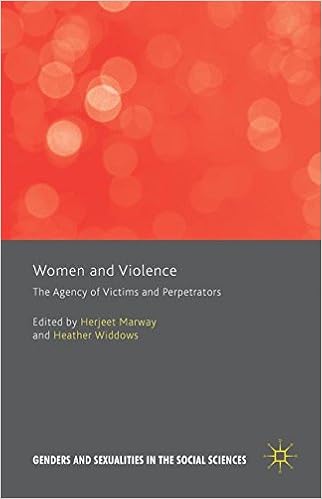
Women and Violence: The Agency of Victims and Perpetrators


The document Women and Violence: The Agency of Victims and Perpetrators is divided into four main parts: women as victims of violence; women as perpetrators of violence; governance, violence and agency; and theorising violence and agency. Here I will try to present some notable features of this book and also explore its possible relevance to Indian society.

It may be noted that in today’s society, rape culture significantly compromises a woman’s autonomy, even when an actual incident of rape doesn’t take place. Due to rise in number of reported cases, women live in a constant fear. Despite having stringent laws and an apparently vigilant administration, rapes do happen.
The act of rape, by its very nature, damages the victim’s autonomy since it violates her bodily integrity and disrupts her sense of ownership over her actions and decisions. Being raped can also dramatically alter the agent’s psychological life, interpersonal relationships and identity.
Also rape shatters the victim’s assumptions about the personal safety that her society offers. Often the victim ends up with a total lack of trust in others. This adversely affects her ability to make independent decisions. The damage takes years to heal. However, whether it will heal at all depends on a number of external circumstances. The autonomy is ‘shaped by complex, intersecting social determinants and constituted in the context of interpersonal relationships’ (Mackenzie and Poltera 2010, 48) that being autonomous depends on socially supportive ‘relations and recognition’. Autonomy is acquired over years and years of social existence. A rape entirely changes the course of one’s life. Once it happens, it becomes difficult, if not impossible to regain the level of autonomy that one used to exercise.

It is observed that the society, in a knee-jerk reaction, responded to rape culture by first, enacting stricter laws and secondly by promoting self-defence training for young women. Though apparently these steps bravely address the issue, in truth they are only making the solution more distant and difficult to achieve. In India, the Nirbhaya incident brought about protests and marches that tickled the lawmakers into enacting some more laws. Not that there was no law before to address the rape culture. Though the response of the Government was quite natural, but what it did best was it addressed neither the prevention nor cure. Perhaps the laws were meant to be a deterrent, but even the conservative statistics shows today that they had little or no effect on the prevailing rape culture. Over the last few years the fear or rape among the women only increased.
An upshot of rape culture is that women’s fear of rape can result in a loss of ‘self-confidence, self-respect, and self-esteem; nightmares and other sleep disorders; distrust and suspicion of strangers and acquaintances; chronic anxiety, stress, and depress; inability to live alone (where that is desired); and increased dependence on men for protections, which in turn undermines self-respect and self-confidence’.
The main objection against the introduction of self-defence training is that, it conveniently shifts the responsibility from the perpetrators to the victims. The directly result of rape culture is that it threatens the autonomy of women. During the self-defence training programs attempts are made to focus on re-educating and resocializing women in ways to equip them to resist rape where this inadvertently holds them responsible for mitigating the risk of rape. Also there seems to be an underlying belief that rapes can be avoided from initiatives on the part of the women. The onus of the responsibility is primarily on women and not on men. In South Africa, self-defence courses formed part of the extracurricular activity during high school.
South Africa has ‘higher levels of rape of women and children than anywhere else in the world not at war’ (Moffett 2006, 129).
It didn’t help them, and there’s hardly any possibility that it will help us. Focusing on self-defence training is like treating a symptom of the problem instead of curing the problem itself.

“I can’t even think of taking public transport after 9 O’ Clock,” says a young student in aninterview with Guardian. Even though six years have passed since the brutal rape of 23 year old Nirbhaya, women in India still feel unsafe. In the same interview a martial art teacher says that behind the back of their mind, parents are worried what will happen to their daughters out on the street. A mother, whose daughter is learning Karate, says she feels more confident now that her daughter can take care of her in the face of danger. Some of those interviewed though felt bit sceptical about this whole self-defence thing, because they think, “Asking women to keep themselves safe is a way problematic narrative because you’re keeping the onus of safety on women.” “You are trying to tell rest of the society – men and boys – you can continue doing what you want to do but girls should protect themselves,” says another interviewee.

What followed the Nirbhaya case, as a direct result of a nation-wide protest, was some tinkering with the laws. The maximum punishment of rape became death penalty instead of life imprisonment. Surprisingly that was all what the protestors had demanded for. However, the lawmakers decided not to touch the issue of marital rape as they thought that may destabilize the institution of marriage. They also refused to try military personnel accused of sexual offences under criminal law. However, for the time being, everyone seemed appeased, if not satisfied. And after six years had passed most of us forgot all about it.

On 1st Feb, 2018, the Centre, according to a report published in Times of India, told the Supreme Court that it was not in favour of amending laws to provide for death penalty to those found guilty of sexual assaults on infants and children.

However apparently the people were already way too dissatisfied with the way things were being handled. In Jharkhand, Ratan Lohar, a man convicted in a rape case, was out on bail. He went to Ram Dadaiya slum where he had created terror earlier. There were some altercations between him and the locals. A group of people lynched him (Hindustan Times, Mar 03, 2018). On 19th Feb, 2018, about 1,000 men gathered in front of a police station in Arunachal Pradesh and demanded that two inmates be handed over two them. The two suspects were charged of raping and murdering a five year old girl whose decapitated body had been found in a tea garden on 12th Feb. They lynched the suspects (Sky News, 21st Feb, 2018). Terribly unfortunate as these incidents were, they only showed how little faith people had in our legal system.

What the Government, the activists and the protestors together failed to eliminate was the rigid patriarchal mindset of our society. Most of us will naturally resist any change to that, because directly or indirectly most men benefit from this system. The police are particularly well positioned to provide assistance, but very often because of their own prejudice and lack of training and reluctance to intervene (especially when there’s caste or communal politics involved) they often display a dismissive attitude. The majority of cases of sexual assault and battery end up in one or the other health care facilities. Medical system and its personnel, though well placed to identify signs of abuses, often choose not to intervene. Then there are religious outfits who suggest women should be subservient, patient despite high emotional and physical cost to themselves. They often play a major role in unjustly placing the burden on the victim. All these people contribute heavily to the prevailing rape culture.

Now we’ll examine some of the remarks that came from various classes of our society. Recently Snehlata Shankwar, a biology teacher from Raipur’s Kendriya Vidyalaya warned the girls against wearing lipstick and wearing jeans. She said,
“Girls expose their body only when they don’t have beautiful faces. Girls have become so shameless, why did Nirbhaya go out so late at night with a boy who wasn’t her husband? It’s difficult to understand why an issue was made of this. Such incidents happen with girls in remote areas frequently. Nirbhaya’s mother shouldn’t have allowed her go out so late at night.”Source: Times Now, Jan 30, 2018
Just about a year after the Nirbhaya incident, Finance Minister Arun Jaitley commented at a tourism minister’s conference,
“One small incident of rape in Delhi advertised world over is enough to cost us billions of dollars in terms of global tourism.”Source: NDTV, Aug 22, 2014
On 18th August, 2015, Mulayam Singh Yadav shared his doubts on the feasibility of gang-rape,
“Four people are named for rape, can it be possible? It is not practical.”Source: Catch News, 14 Feb, 2017
Earlier in April 2014 he had shared another of his precious reflections on the misuse of rape laws,
“Boys make mistake. They should not hang for this. We will revoke the anti-rape laws.”Source: Catch News, 14 Feb, 2017
West Bengal Chief Minister Mamata Bannerjee also joined the controversy with a highly regressive comment on Nirbhaya gang-rape case,
“Earlier, if men and women would hold hands, they would get caught by parents and reprimanded but now everything is so open. It’s like an open market with open options. Rapes happen because men and women interact freely.”Source: Catch News, 14 Feb, 2017
But what topped them was probably the statement made by a god man called Asaram Bapu, who, during that time had around 7 crores followers. Immediately after the incident he commented,
"She should have taken God's name and could have held the hand of one of the men and said I consider you as my brother and should have said to the other two, brother I am helpless, you are my brother, my religious brother. She should have taken God's name and held their hands and feet...then the misconduct wouldn't have happened."Source: Times of India, Jan 8, 2013
This is eerily similar to the statement given by Mukesh Singh, one of the accused in Nirbhaya Case, in his interview given to BBC’s Storyville documentary crew.
"A decent girl won't roam around at 9 o'clock at night," he told the BBC. "A girl is far more responsible for rape than a boy. Boy and girl are not equal. Housework and housekeeping is for girls, not roaming in discos and bars at night doing wrong things, wearing wrong clothes."Source: CNN, Mar 4, 2015
Singh, who showed no remorse and merely dubbed the incident as an accident, suggested that they "had a right to teach them a lesson."

All this points to a deeply entrenched patriarchal mindset that is too ugly to even look at. The psyche is so deep rooted that today it is passively supported even by the women who are the primary target of it. The great books that we hold so sacred reek of sexual oppression. In one of those epics, a royal princess, as a result of a pre-marital sex – that was possibly forced – gives birth to a son. An effort to suppress the incident was immediately made by calling the boy ‘a gift from the sun-god’. To emphasise it, the boy was even named accordingly. Another princess, after she got married to discover only to her shock that she now had to sexually satisfy not only her husband but also her four brothers-in-law. No one asked for her consent. In another book, a woman was brutally assaulted when she proposed to one of the hero’s brother. Her fault, she was a Dravidian, therefore too inferior to court an Aryan prince. In the same epic a princess was thrown into fire time and again to prove her loyalty to her husband. She did it without uttering a word of protest, let alone landing a tight slap on his royal cheek – something that he actually deserved.

These are some of the values that were injected in us from early childhood. The founder of every major religion is essentially a patriarch who had also showed his acumen in devising elaborate plan to exploit and enslave women. One among them even went as far as instructing how to treat women who belonged to a different religion – a process that is now perfectedand widely implemented by ISIS soldiers.

Now back to the book Women and Violence: The Agency of Victims and Perpetrators.
... the prevalence of oppressive gender norms: norms which restrict women’s movements, the contact they have with each other and with other men, and limit opportunities for self-sufficiency.
The autonomy of women is hindered by oppressive gender norms, such as ‘women ought not to dishonour their families’, ‘women’s value is dependent upon their reproductive capacities,’ etc. All this somehow limits the role of women to two tasks – child bearing and sexually satisfying the husband. The relation of pornography to patriarchy is the backbone of Andrea Dworkin’s Pornography: Men Possessing Women, where its relation to patriarchy has been widely discussed. Pornography offers ‘a model of how to do sex.’ But men also learn about women and sex from pornography that somehow sends the message that women enjoy being subjugated and abused. Often the focus shifts from mutual pleasure to violence. However, pornography is not the sole contributor when it comes to commercialisation of female body. Haven’t we seen the TV commercials that imply to gain access to a woman all you need is a certain shaving cream, or a certain perfume? And with the invasion of social media nothing is private anymore – not even female sexuality.

The authors of Women and Violence: The Agency of Victims and Perpetrators believe that promoting sex education can make a great difference.
... need to educate young men about consent in terms of communicative sexuality and to emphasis mutual pleasure in sexual encounters. This is one way of ensuring that men treat women as equal partners, with their own desires and needs that ought to be respected.
This could be more useful than teaching young women self-defence, because this will address the root of the problem. There already exists such a system in India, though the methods should be improved. There are people who actively campaign against the system.
"Sex education in schools need to be replaced by yoga education," Ramdev also told reporters. "The government should stop polluting the minds of innocent young children with sex education. Society's morality cannot improve with teaching sex education in schools. And AIDS cannot be prevented by talking free sex and by using condoms."Source: Rediff News, Nov 20, 2014
Prejudiced remarks like these should be countered with criticism. Logic should replace superstitions. Celebrities play important role in enhancing/diminishing the patriarchy. Harvey Weinstein, who was accused of impropriety by more than 100 women, recently made a public statement saying a woman having sex with a Hollywood producer to advance her career is “not rape” (Times of India, Mar 3, 2018). A patriarchal society deeply impairs our value judgement and men who remain indifferent to this are also complicit.

Not long before I wrote this post, a minor girl had immolated herself in Jharkhand’s Chatra District, shortly after she was raped by a man on 22nd Feb, 2018 (Hindustan Times, Feb 24, 2018). It was when she went out of home to answer nature’s call, said the report, that she was raped. There is a vast difference in life of the victim before and after a rape takes place. It is much worsened by the fact that most of the rapes are done by people known to the victim. It proves to the victim that the illusion of safety that the society had offered was an illusion after all. Some are strong enough to cope while to some it is a pain too intense to bear. Not every incident is reported. There are police officers and lawyers who can make rape victim feel like the rape was somehow their fault and the family members of a community whose attitude about bringing shame on the family or community often silence them and every time it happens we lose yet another battle with rape culture.


Women and Violence: The Agency of Victims and Perpetrators
View Source
Pornography Men Possessing Women
View Source

February 14, 2018

ISIS Sex Slavery by Nicolas Lucont Book Review

Book Review of ISIS Sex Slavery Interviews with the Sex Slaves and War Brides of ISIS Militants by Nicolas Lucont

ISIS Sex Slavery: Interviews with the Sex Slaves and War Brides of ISIS Militants by Nicolas Lucont

ISIS Sex Slavery by Nicolas Lucont is a collection of interviews with the sex slaves and war brides of ISIS militants. Some of the chapters contain graphic details and incidents of violence that readers may find disturbing. The book however presents true, firsthand accounts from people who were once the victims. The sex slavery is just a part of it. There are reckless and brutal killing, gang rapes and other violent acts that are day-to-day affair in ISIS occupied places.

The book has two main divisions – the war brides and the sex slaves – and several chapters with the interviews and also brief introduction to the life and philosophy of ISIS militants. When the militants arrived at the village, recounts Mustafa, a young Iraqi refugee, he overheard them talking about killing all the men. But they were very short on bullets. So they decided to cut these men up at the carpenters’. They didn’t do the killing themselves. Instead they lined up the men and asked the carpenters to saw their heads off. Mustafa’s uncle, who was a carpenter, was forced to saw his brother’s head off. The militants asked some of the older kids to gather the heads and put them in large baskets.
Another boy caught my father’s head but I got him to give it to me. I cleaned the blood from his face and I combed his hair before placing it in the row of severed head.
When everything was done to their satisfaction, they killed the carpenters too. They didn’t use bullets. They just beat them on the heads with clubs until the skull collapsed and the blood and brains came out. Mustafa ran home to find his mother being raped by some ISIS militants. When they left, he went inside the house where his mother was curled up in the bed. She asked him to run to his grandmother’s house and stay there. Mustafa went there but found the house empty. So he ran back home to discover that her mother had killed herself.
I went to my uncle’s home. He was one of the carpenters that were clubbed to death. When I got there my aunt was being raped by ISIS men.
The ISIS fighters were rewarded with the freedom to rape whomever they desired when they were in the battlefields. Nicolas Lucont here discussed the condition of the brides of ISIS fighters. Most of them were quite enthusiastic about marrying a soldier. After marriage however their life was no different than the sex slaves. The fighters could abuse them as much as they desired. Marital rape was a concept unknown to them. The wives were often treated like animals.

Yet these women volunteered. They had to study Quran and pass religious tests in order to become eligible to be married to an ISIS jihadist. They were often trained to nurse war wounds and also to clean rifles and guns. Once married these women were forced to take birth control. Though the birth control pills are forbidden in Islam, the ISIS mullahs gave an edict to that order. By not having children, they said, the women were doing Allah’s wishes to have their husbands be on the battlefield. ISIS leadership believed that when a militant had children, he would want to settle down. He would work on a farm, start a business or something like that.
The way they saw it if the women had children, ISIS lost a soldier.
The process through which militants chose their wives was akin to purchasing cattle from the market. The women were lined up – naked – and the militants get to choose. Fadyaa, a young Muslim woman now living in Paris, said she was very excited to become wife of a holy warrior. She was shocked when the mullah asked her to take her burqua off.

The soldiers picked some of the pretty women and left. Then the women were asked to take their robes off. Another group of men walked in. The mullah took a wooden spoon and started to beat the bottom of the women.
The men then picked for wives the women who screamed and cried in a way that brought them pleasure. I was very loud when my bottom was beaten so I was picked up first.
Fadyaa was married to a soldier who beat her every day. He enjoyed hearing her scream and said she was his songbird.

The mullahs issued diktats that were often contradictory but convenient. They had reduced the institution of marriage to the level of prostitution. When their husband died, an ISIS wife was quickly assigned to marry another militant, and often without allowing the woman to mourn. Fairuzza, now in France, had been married four times in a year. When she went to the matron’s quarter, the same mullah’s that forced her to marry four times threw her out. After four men, you weren’t good for any man anymore, she was told.

Most of these interviews revealed the gruesomeness of daily life of ISIS militants. Yemina, whose husband had the hobby of collecting skull, had to clean the human skulls on regular basis. This ISIS fighter had skulls all over the house, for decorations.
My favourite piece was the skull tower. At the bottom we had the biggest skull, then followed by a smaller skull on top and so on until you get to a child’s skull, then a toddler skull, then a baby skull, then finally a fetus skull on top.
Then there was Malika, a young ISIS wife, who was given by his husband to young men whom he would trick to come to his home. A cleric gave him a written fatwa that since he had given his body to fight for Allah, in order to do the duties of a married man, he could use another good man who believe in jihad to serve in his place in the bedroom. That he could let get other man have sex with his wife. He would put this fatwa in display in his room. This made the men interested.

He would dope them and then make them have sex with Malika. Then he would show them another fatwa that he got from his cleric that said that if he ever caught a man having sex with his wife, he was obliged to beat and torture him. So he would beat and torture them in the basement for days, for his own sadistic pleasure.
We never got into any trouble because we had fatwas covering all the angles and because my husband was a very important man in ISIS.
Even later when word got around about the routine, men and boys, hoping that he’d invite to his house, started to visit places where her husband hung out.
They were so eager to lose their virginity with a woman instead of a goat that they volunteered even knowing they would be tortured half to death.
It was the Yazidi women who were the prime victims of ISIS Sex Slavery. It is believed that Yazidi women are generally attractive. In 2014, ISIS mullahs gave permission to jihadists to kill Yazidi men and enslave the Yazidi women.
... many of the Yazidi women are strikingly beautiful and that’s the major reason the Yazidi were targeted for sexual slavery.
Some of the Yazidi women interviewed in this book were betrayed by their Muslim neighbours. Matin, a young Yazidi boy told about one Mr. Hashem, their neighbour who betrayed them to ISIS fighters just to be allowed to rape Matin’s 16 year old sister.
For his help he was going to get a big screen TV one of our Yazidi neighbours owned, my Xbox and all my games, and he would get to rape my sister.
But the ISIS men thought that Bada, as a virgin, would bring good money if they sold her as a slave. So they took her. But instead of shooting Matin’s mother, they were going to let her live so that Mr. Hashem could get a chance to rape her before they killed her.

There were love camps but they were not like the comfort camps run by Japanese soldiers during the world war. There was, says Nicolas Lucont, no love in these camps. Here women were trained to become sex slaves of rich businessmen or sheikhs. Katya, a Russian born woman was in charge of Eva Love Camp that was quite famous. Luna, a Yazidi woman was thus trained and afterwards sold to a businessman from Iraq, Mr. Zahadi. He already had two other love slaves. He didn’t have sex with them. Instead he watched them round-the-clock through peepholes strategically placed at various locations in his house. These maid-cum-slaves also had to entertain rich and powerful people who often visited Zahadi. One such important guest was Admiral McConrad, an American. Somehow Luna hoped that this man would save her, liberate her from her slavery.

Later when she was shamed and humiliated by this man who used her body in every way for his own sadistic pleasure, she became disillusioned. He was like all other men - she concluded. When they find out they can get away with rape, they happily joined in.

 The most heinous war crimes that are committed by ISIS Fighters are probably done against these Yazidis. The last few chapters were about Yazidi women. This is also the part of ISIS Sex Slavery: Interviews with the Sex Slaves and War Brides of ISIS Militants by Nicolas Lucont that’s the most difficult to go through. There are also instances where brave Yazidi women escaped the slavery and took refuge in other countries. There are women who took up arms against the ISIS atrocities. Most of them were either witnesses to the barbarism or were victims themselves. If you are one of the sensitive sort, you should not read this book. There is too much to challenge our sanity and endurance. This book can move you to tears; shock you beyond your wildest imaginations. Yet it all happened on the same earth where we live.


Enslaved by ISIS Bitter Blackness Terrorism and the rise of ISIS

January 28, 2018

The End of India by Khushwant Singh

Book Review of The End of India by Khushwant Singh

End of India by Khushwant Singh

Khushwant Singh, in his book The End of India, foretold the rise of Hindu fundamentalists to power. This he said would be the beginning of the decline of a nation. We can see by the natural order of things that most of his predictions had already come true. The grim future that he showed would be the inevitable result of allowing religion into the arena of national politics. There’d be a time, Singh remarks, when all our secular values would be thrown out of the window. The present state of the Islamic countries, where religion was once allowed to take control of politics, should serve as a good warning to us. These nations remained backward and largely undemocratic. There is little or no freedom of speech. Women are treated like properties. A voice of dissent is first declared blasphemy and then hushed up with extreme cruelty. The eminent leaders in Europe foresaw this grim future. They summoned all the forces they had to wrestle away the political control from the church, just in time.

Some people are of the opinion that it was the British who sowed the seeds of communalism into our land. Such things only came out of our efforts of denying our own diversity. The culture of ours was never a perfect monolith. There were divisions based on castes, creeds and even on linguistic levels. 

To be perfectly honest, we were hardly ever united. The communal tensions between Hindus and Muslims became more pronounced during the Mughal era. The British were mostly indifferent of these things as long as they didn’t interfere with the administration.
The British followed a policy of divide and rule, but in India it was never difficult to divide. There were Hindu-Muslim riots every now and then and that suited the British fine as long as there was no threat to their empire.
After the Independence, the communal politics only turned more intense. The more conspicuous it became, the more we threw ourselves in denial. Pt. Nehru knew that the real threat to India’s secular democracy would be the resurgence of fundamentalism among Hindus who formed more than 80 percent of the population. He was able to oppose it as long as he lived.
... when Dr. Rajendra Prasad agreed to inaugurate the newly rebuilt temple at Somnath, Nehru sent a strong note protesting that the President of a secular State had no business to involve himself in religious matters.
Nehru never encouraged sants, mullahs or priests to enter into mainstream politics. The post-Nehruvian politicians were not so scrupulous.
The slide began with his daughter Indira Gandhi. With her, people like Dhirendra Brahmachari became formidable figures. Astrologers and tantrics were included in decision-making circles.
Today we blame organizations like Vishwa Hindu Parisad, RSS, Bajrang Dal, Bharatiya Janata Party, Shiv Sena for radicalising our youths. But the so called ‘secular’ Congress missed no opportunities to exploit the communalism in Indian politics. These leaders were never interested in nation building. These politicians ensured that Muslims and Dalits remained poor and uneducated so that they may be fooled and used conveniently when it suited them.

Khushwant Singh, a witness to several major incidents in history, had been a reliable narrator. In his book The End of India he remembers the Partition, the Gujrat riot and the assassination of Indira Gandhi. All these were blots of shame in our history with some communal colours attached to each of them. During Partition innocent bloods have been spilled on both sides of the border. In his book, Terrorism: History and Facts in the Worldand in India, N. S. Saksena, a retired Director General of Police, wrote about the anti-Sikh riots that broke out after the assassination of Indira Gandhi. Most of these riots were led by Congress leaders. ‘The police in Delhi, Kanpur, Gaziabad, etc,’ he said, ‘was under the impression that anti-Sikh riots had the approval of the government.’
Ninety-nine percent of the accused charged with these unbailable offences were released on bail and they terrorized relatives of the very people they killed and molested from giving evidence against them.
Saksena, in his book, remarks, ‘terrorism has largely been a public sector enterprise.’ Instead of condemning it, the then prime minister commented, ‘When a big tree falls, the earth about it shakes’ referring to the assassination of Indira Gandhi. In the election campaign that followed its posters came with rhetoric of hatred – ‘Do you feel safe in a taxi driven by a member of another community?’ The reference to Sikhs was unmistakable. In Amethi the slogan that the Congress party chanted was: Beti hai Sardar ki, qaum hai ghaddar ki – she is the daughter of a Sikh, she belongs to a community of traitors. This referred to Rajiv’s Sikh sister-in-law Maneka. Surprisingly, this anti-Sikh sentiment actually worked for them. The Congress Party had a landslide victory.

So, when BJP took over the political climate was already communally charged. The Congress had been immensely successful in estranging Muslims from the mainstream society. They have closed their minds and withdrew into their social ghettos, just like a tortoise withdrawing into its shell.
We did not do enough after 1947 to rehabilitate them in the national mainstream. The non-Muslim has always had it deeply embedded in his mind that Muslims are bigots, fanatics and treacherous.
Khushwant Singh observed, ‘All our heroes were non-Muslims who had fought Muslims.’ Even Akbar was a token figure in our text books. The gist of these texts was modified to suit the need of our leaders. All that the Muslims rulers ever did, we were told, was to desecrate our temples and to impose humiliating taxes on non-Muslims. Our nation was already rife with such prejudices that the Hindutva elements capitalised to their political needs. In fact, they took a policy akin to that of the British, to rule over us. This helped the fundamentalists to sell their lies to us. This also helped them to distract us from more important socio-economic problems that they miserably failed to solve. They were also quick to place the ‘anti-national’, ‘communist’, and ‘pseudo-secular’ tag to anyone who protested. This was quite a popular method among politicians to mobilise public support. Any violence therefore is justified as long it is buttressed by the state and the majority of its people. This sentiment was so strong that under its influence we could conveniently ignore the facts and figures that went against our beliefs.
Judge Madon’s report, delivered after the Bhiwandi riots when the Congress was in power at the Centre and in Maharashtra. Although the Muslims were the victims (of 121 killed, well over 100 were Muslims; of the property destroyed or looted, ninety percent belonged to the Muslims), the vast majority of those arrested were Muslims.
During this time even the Maharashtra police showed pro-Hindu bias as they beat Muslims prisoners and deprived them of food and water. Even in the Home Ministry circular that comprised of instructions on how to deal with communal riots, the assumption was that it was the Muslims who were behind the riots.

The rapidly increasing number of uneducated and unemployed youths, observed Khushwant Singh, adds to the problem. In absence of sense of direction, they are easily caught up in the wave of propagandas, communalism and hatred. It is important to understand that we, the Hindus are as foreigners as the Muslims. It is the adivasis who are actually the indigenous people of India. Them, we have successfully pushed towards extinction. We, the disillusioned and dissatisfied lots, are made to believe that it is the ‘other’ people and not our incompetent leaders behind all this. The media had been playing crucial role by continuously thumping the common man with propaganda materials. Today they serve no other purpose than to put the clock of scientific progress backwards.

Khushwant Singh in his book, The End of India, painted a portrait of India that we have been pushing into our subconscious mind with a pious denial.  The future indeed looks grim. The freedom of speech curtailed,  the words ‘Hindutva’ and ‘Nationalism’ becoming synonymous, mobs lynching men with impunity, and the state and its legal machinery playing the roles of mute spectators – all these indicate in which direction the nation is moving. Khushwant Singh, an author whom we greatly respected for his uncompromising honesty, minces no words to predict the fate. And I couldn’t help but agree with him. It probably is the beginning of The End of India.


Sunset Club Sahibs Who Loved India We Indians Khushwant Singh