Pages

Showing posts with label Philosophy. Show all posts

April 2, 2018

Micromegas by Voltaire: A Critical Review


Voltaire’s Micromegas, a 1752 novella, is a philosophical satire disguised as a science fiction. Though the use of the concept of an Outsider was much in vogue in fiction in his time, they mainly discussed Earthlings visiting remote places. In Voltaire’s Micromegas, the hero comes from a distant planet that orbits the star named Sirius. Though apparently this book may read like a simple sci-fi story with a touch of humour here and there, I found layers of meaning hidden inside the plot. Micromegas, as per my understanding, is a satire that is to be understood in its specific political and philosophical context. Though there may be more than a hundred interpretations of this, in my review, I’ll stick to my own understanding.

Before going into details, let me first tell you a thing or two about the hero Micromegas. He has an enormous body. He is about 20, 000 feet tall. The planet that he came from was 21,600,000 times greater in circumference than our little Earth. The lifespan of its inhabitants are also quite long. Our hero had reached the end of his infancy in his 450th year. During this time, he had written some highly controversial treaties on biological science, because of which he had faced a trial that lasted 220 years and ended in his banishment from the court for 800 years. I am mentioning all this because while reading Micromegas, you’ll know that proportion is an important factor in this book. Everything about Micromegas is an extension of humans, but not just any arbitrary extension. The extension is well calculated and proportional. The name ‘Micromegas’ itself denotes the hero’s relative position in the vast universe. He is micro or small with respect to some, and megas or big with respect to some other.

Voltaire’s hero Micromegas also possessed knowledge that was an extraordinarily vast. In his youth he had done extensive research in Entomology. He had written a book about that. But that book eventually landed him in trouble. A mufti of his country – an extremely ignorant worrywart, found some suspicious, rash, disagreeable, and heretical propositions in his book. That led to his trial. Ironically, jurisconsults who had not read the book condemned it and banished him from the court. It is to be noted that when Micromegas wrote an amusing song mocking the same mufti, it hardly drew any attention. This incident is surprisingly similar to Voltaire’s own life story.
He mainly argued for religious tolerance and freedom of thought. He campaigned to eradicate priestly and aristo-monarchical authority, and supported a constitutional monarchy that protects people’s rights.
Source: Wikipedia
As a result of his dispute with the authority, he was twice sentenced to prison and once to temporary exile to England. In fact, it was during one such imprisonment in Bastille, he adopted the pen name Voltaire (his real name was Francois Marie Arouet). Voltaire tried to make the best of his stay in England. He mastered the language in about a year. He extensively studied Bolingbroke, Pope, Addison and Swift and marvelled at the amount of freedom these English authors enjoyed.
There was no Bastille here, and no lettres de cachet by which titled pensioners or royal idlers could send their untitled foes to jail without cause and without trial. Here were thirty religions, and not one priest.
Source: The Story of Philosophy; Will Durant
Later his Letters on the English was to bring about the revolutionary fervour into French soil. The point is: Voltaire, like Micromegas, turned his exile to his advantage. Micromegas, during this time, took to travelling from planet to planet in order to extend his knowledge. The vehicle he employed, said Voltaire, used technology yet unknown to us. However, we could only assume that it made effective use of the law of gravity. It is to be noted that during his stay in England, Voltaire had attended Issac Newton’s funeral where he came to know of Newton’s works through his half-niece Catherine Conduitt. Voltaire assiduously followed the works of Issac Newton. Voltaire, in 1738 wrote Elements of the Philosophy of Newton. He practically brought Newton into France.

Micromegas seemed to be a believer. On various occasions he mentions ‘Author of Nature’ and ‘Providence’ in his conversation with the Saturnian philosopher.  During his long voyage he noted that the nature of life on a planet greatly depended on its size. From senses of its inhabitants to the properties of its matters – everything increased or decreased in definite proportion. Micromegas attributed all that to Providence. He along with the Saturnian, decide to continue their voyage together. They went to Jupiter, then traversed a space of around one hundred million leagues and approached the planet Mars that, they noted, was orbited by two moons. It is to be noted that the two moons of Mars – Phobos and Deimos – were not discovered until in August 1877 by Asaph Hall. How did then Voltaire arrive at this conclusion? By simple analogy – he said.
I know very well that Father Castel will write, perhaps even agreeably enough, against the existence of these two moons; but I rely on those who reason by analogy. These good philosophers know how unlikely it would be for Mars, so far from the sun, to have gotten by with less than two moons.
Micromegas and his companion arrived at Earth on July 5, 1737. This date is important to decipher some of the historical references made in this book. They circumnavigated the globe on foot in 36 hours. That’s nothing unusual considering the huge size of Micromegas.

The part of Micromegas by Voltaire that’s philosophy started at this point. The free-thinker from the outer world spotted something moving in one of the Oceans that he considered nothing more than little pools encircling the molehills. He picked the thing up. It was a whale. He examined it for some time and concluded that that a soul should be lodged in a creature so small, is improbable. He took a microscope and continued their observations. Something else, almost as large as the whale appeared in the microscope. It was a ship. Micromegas clipped his nails with a pair of scissors and with those clips made something like a vast funnel, to hear the feeble sounds the crews were making. Though at first it sounded like the drone of insects, in a few hours he was able to get a feel of the language that was French. To communicate, they placed toothpicks in their mouths, whose tapered ends fell around the ship. The ship happened to have some scientists and philosophers onboard. Here Voltaire has mentioned a vessel that while returning from a voyage to Arctic, sunk somewhere in the Gulf of Bothnia. I tried to do some research on this, but couldn’t find enough resources to support it as a historical fact. May be it was just fiction.

When Micromegas hinted that life on Earth must be truly blissful, the philosophers disagreed and told him about 100,000 madmen of our species wearing hats, killing 100,000 other animals wearing turbans, or being massacred by them. This is the historical reference of war between Russia and the Ottoman Empire over the access to the Black Sea. The war resulted in the Treaty of Nis between Russia and Turkey (29th Sept, 1739). It should be noted that Micromegas reached Earth on the same month that is July, when Russian army stormed the Turkish fortress of Ochakov formally beginning the Russo - Turkish war (1737 - 1739) that those philosophers talked about.  

The philosophical discussion then turns to the question of soul. I think this is the most vital part of the whole story. This helped me to better understand the way the story of Voltaire’s Micromegas ended. On the question of soul, the philosophers divided themselves in different camps. Some mentioned Descartes, another Leibnitz, some quoted Locke. An aged philosopher among them even quoted Aristotle in its original Greek form. Micromegas admitted that he didn’t understand Greek very well, to which the philosopher replied that he didn’t understand it either. Micromegas, surprised at this, asked him why then he quoted in Greek.
“Because,” replied the savant, “one should always cite what one does not understand at all in the language one understands the least.”
Another philosopher brought up the fantastic theory of Thomas Aquinas. Their people, their worlds, their suns, their stars – he said – had all been made uniquely for mankind. At this the aliens laughed heartily. In the end, Micromegas promised to make them a philosophical book, written in miniature form for the convenience of humans. The book that he left was taken to the Academy of Science in Paris. When the secretary opened it, he saw nothing but blank pages in it.

Voltaire’s Micromegas is a philosopher who came from a civilization far advanced in all respect than that of humans. Despite being a possessor of great wisdom, he was receptive to new ideas. He travelled the universe with humility in his heart and a thirst for knowledge. Genial though he was in his manners, he detected vanity in the philosophers of Earth. He also realized that other than mimicking the words of a handful of old philosophers, human beings hadn’t progressed much. According to my interpretation, this is the reason why Micromegas left a blank book for us. He wanted us to start afresh, write our own philosophy, instead of basking in the glory of the ancients.

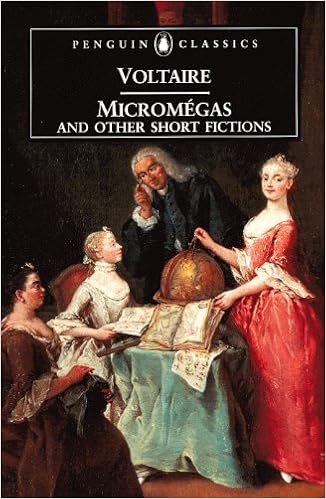
Micromegas by Voltaire
VIEW SOURCE

The Story of Philosophy
VIEW SOURCE

March 29, 2018

Book Review: The Stranger by Albert Camus


The Stranger by Albert Camus

The Stranger is a novel by Albert Camus is considered to be one of the finest literary works of 20th century. A few days after Meursault, the hero of The Stranger, attends the funeral of his mother, he kills an Arab. In his trial the fact that he didn’t show emotions during the funeral is used to evaluate his morality. Meursault received the news of his mother’s death through a telegram. He applies for two days leave in his office and starts for the Home for Aged Person at Marengo to attend the vigil. There he is told that it has been his mother’s wish to be buried with the rites of the church. This strikes him as bit odd, because as he knew it, his mother never gave religion much thought.  His mother’s body is kept in mortuary where he presently enters. The lid is placed on the coffin, but the keeper asks if Meursault wants him to unscrew the lid so that he could see his mother. Meursault tells him that won’t be necessary and that he can directly proceed. Due to the long journey Meursault feels exhausted. His legs are cramped and he is extremely drowsy. The keeper offers him a mug of cafe au lait. The coffee refreshes him. He offers the keeper cigarette and lights one himself. The oppressive heat bothers him. He leaves immediately after the funeral is over.

Next morning Meursault decides to go for a swim. In the pool he meets Marie Cardona, a typist from his office. They go to a movie. After that they spend the night in Meursault’s place. From this time onward Marie and Meursault become steady. Meanwhile, his Raymond invites Meursault to his room one day and tells him about his trouble with an Arab girl. Raymond asks for his help to write a letter to this girl. Meursault writes the letter. He also agrees to stand as a witness in favour of Raymond. Later in his own trial, all these will be used against Meursault. Raymond thinks he is being followed by some Arab men. Meursault, Marie and Raymond are invited by Masson, Ramond’s friend to spend the day in his bungalow near beach. The Arab men are still on their track. One of them attacks Raymond with a knife. Soon afterwards Meursault shoots one of the Arabs with Raymond’s revolver – a crime for which he will be tried and possibly executed, though the later isn’t included in this first person narrative.

About The Stranger by Albert Camus, much has been already said. Some believe that behind the novel’s apparent simplicity, there is an important philosophical message. Some assigns The Stranger to contemporary existentialist philosophy. However, Camus himself denied it. He said,
I summarized The Stranger a long time ago, with a remark I admit was highly paradoxical: 'In our society any man who does not weep at his mother's funeral runs the risk of being sentenced to death.' I only meant that the hero of my book is condemned because he does not play the game.
However, he has been criticised for underplaying its philosophical values. Efforts have been made to relate The Stranger with absurdism – Camus’s own philosophy. The Arab whom Meursault kills, is never named, either because it’s a minor character, or, in order to show how absolutely pointless the incident is. The emphasis lies in the portion of the plot where Meursault’s trial takes place. The prosecutor summons witnesses to prove that a man who doesn’t show any emotion whatsoever in his mother’s funeral, is morally degenerate and even inhuman.  It was as if it is not Meursault but his ‘absurdist’ attitude towards society that is being punished.  The Stranger by Albert Camus, in my view, is a sardonic response to the society’s stubborn denial of death as well as the absurd.


Collected Works of Periyar E. V. R. On Nationalism Micromegas

March 10, 2018

Periyar E. V. Ramaswamy: Philosophy and Ideals


The Philosophy of Periyar E. V. Ramaswamy centred around atheism. His atheist arguments were predominantly against Hindu scriptures like Vedas, Manu Samhita, Ramayana, Mahabharata etc. His frank and unapologetic words are often shocking if not alarming. Before the end of this article about Periyar you’ll either detest him as an iconoclast or admire him as a rationalist. Only fierce honesty can have that kind of effect on readers.

Thanthai Periyar E. V. Ramasami considered himself a rationalist. He was against anything that was not in tune with reason. He was not loyal to any particular political party. Instead, he extended his support to whoever he thought had done well to the society. He would not support a party just because it was in power. He respected M. K. Gandhi with all his heart, but when the latter refused to take a strong stand against Untouchability, Periyar was somewhat disillusioned.
Gandhiji said: “If the Untouchables (lowest caste people) are prevented from drawing water from a well, let separate well be dug for them; if they are not allowed into the temple, let separate temples be built for them.” I said then: “If no amends are made for the abject humiliation that they cannot draw water from a well, let them there die of thirst. That they must be freed from this degradation is more important than the provision of water to save their lives.”
Periyar aimed his struggle against the Brahmins whom he thought were responsible for caste system. The scriptures, he believed, were some of the things that the Brahmins used to justify their behaviour. He considered Christianity and Islam were in a better position than Hinduism in the matter of social justice. They offered equality and self respect to humanity that caste-ridden Hindu society failed to provide.

He was introduced to Hinduism at quite a young age when Tamil Vaishnav Gurus came to his house and talked about Mythologies. He started placing questions that embarrassed the gurus as well as his family members. His next encounter with religion took place in Kaasi, a noted town of Hindu pilgrimage on the banks of Ganges. There he could not get free meals from the inns that were exclusively for the Brahmins. He starved severely for few days till he couldn’t suffer the pangs of hunger anymore. Wearing a thread on his bare chest, he tried to enter the choultry disguised as a Brahmin. But his moustache betrayed him. He was thrown out. During the feast inside the choultry the leftover food were thrown at the street. Periyar, compelled by the unbearable burning of starvation had to compete with the street dogs in eating the remnants of the left over foods in the leaves. Though the choultry was occupied by Brahmins, it had been built by a wealthy philanthropist of Dravidian Race from Tamil Nadu. The hypocrisy agitated him.
Though Kaasi (Varanasi) has been acclaimed as the most “sacred town” by the Brahmins, the worst ugly scenes of immoral activities, prostitution, cheating, looting, begging crowds for alms, floating dead bodies on the River Ganges turned Periyar to abhor that so-called holy-town.
Back in school, he was asked not to eat or drink in any low-caste house. He had to drink water from the house of a teacher who was a strict vegetarian and belonged to Odhuvar caste. The girl who came with the water used to place the brass tumbler on the ground and poured water into it. Periyar had to drink it without sipping. After drinking he had to place the tumbler upside down. Then the girl would pour water on the vessel before taking it into the house – to purify the vessel touched by a low-caste.
 Compared to this the social position of Brahmins was fairly advantageous. One could go to heaven by prostrating before the Brahmins, or, by drinking the water after washing their feet. It was only the Sudras who were not wanted and there were innumerable ways to insinuate that – to remind the Sudras that they should never forget their place in the society.
They (The Brahmins) tuck the sacred thread they wear in the ear as they pass urine or motion. They say that they escape pollution by this. They will wear the thread only after a bath or when they deem they are pure and clean. Similarly they tuck the thread in the ear when they talk to the Sudras.
Had God created the human beings, why would he make them unequal? Why would Brahmins get special treatment, whereas the low-caste Sudras would be deemed impure? All these questions disturbed Periyar. He took to extensive reading of sacred books to find answer. All he could find were incongruities. They seemed so obvious that it was only surprising how they might stand a rationalist’s arguments. That was the reason, Periyar concluded, to prohibit non-Brahmins from learning Sanskrit. All those texts were in Sanskrit. If people started reading them, that would expose the Brahmins.

According to the Hindu sacred text, during the marriage of Shiva and Parvathi, Brahma had a good look at the Parvathi’s thighs. This made him extremely lustful. He ejaculated repeatedly, first into the vessel near the sacred fire, then on plants and trees, on the ashes of a graveyard, on a heap of bones – and it seemed by doing that he impregnated almost everything around him. When some of Brahma’s semen dropped on the ground, a bird came and consumed it. It immediately became pregnant and gave birth to Sakuni. When a frog swallowed it, it gave birth to Mandothari. Finally when it fell on a lotus flower, the lotus became pregnant and gave birth to Padma.

When Brahma saw the beauty of his daughter Padma he was once again filled with lust. When Padma refused, he chased her. He began to quote the Vedas to make her realize there was nothing wrong in enjoying with anyone, anytime, anywhere for the sake of giving birth to a child. He somehow managed to convince her daughter to have sex with him.

Brahma developed multiple heads to stare at the erotic dance of Thilothama. In these sexual escapades he spared no one, not even a female bear. A human being with bear head called Jambu Vandan was thus born. He even wooed Urvasi, a prostitute. Now since Brahmins are born from the face of Brahma, they were considered the highest caste and the primary beneficiary of the wealth and property of other castes and communities. It is further ordained by The Veda itself that it was a King’s moral obligation to punish those who defy the Vedas and their rituals. What tyranny!

Probably, what served best in safeguarding interests of the upper-caste, was Manu Samhita. It gave Brahmins a place close to deities. They were even allowed to eat flesh of any living being – stags, goats, birds, porcupine, pig, bison, rabbit, and tortoise. They were allotted all that was the best – cow’s milk, curd, paddy, rice, fruits. A Sudra, on the contrary should be away on the day of the ceremonies. The word Dasan, meaning slave, should be affixed to all the Sudra names. Anyone who gave the ceremonial offerings to a Sudra, went to hell. All the upper-caste people who failed to worship Brahmins would become Sudra. In any congregation, food should be offered first to all the Brahmins present. Left over, if any, should be given to others. According to Manu, it was the King’s responsibility to see that Sudras served Brahmins, who had every right to extract work from Sudras with or without payment. Brahma created Sudras to work for the Brahmins. According to Manu,
Any eatable article becomes polluted and unfit for consumption when:1.       A pig dashes against
2.       Hens and cock fly over
3.       When a dog looks at
4.       When a Sudra touches
The Sudras were not entitled to property. There should be no hesitation, said Manu, to plunder the wealth of Sudra. Severe punishments were to be meted out to a Sudra who dared to speak against a Brahmin or so much as utter a Brahmin name through his lips.
If a Sudra talks ill of a Brahmin his tongue should be cut off. Chap.8.S.270 
If a Sudra pronounces the name of a Brahmin or talks of his caste or accuses him, an iron rod ten inches long should be heated red-hot and thrust into the mouth of the Sudra. Chap.8.S.271 
If the Sudra dictates the Brahmin to do a particular thing, boiled oil should be poured into the mouth and ears of the Sudra. Chap.8.S.272 
If the Sudra hits at the Brahmin’s hair, beard, legs, neck, penis, his hands must be cut off. Chap.8.S.283 
If the Sudra sits in a seat along with a Brahmin, his hips should be scorched or he should be driven away from the town. Chap.8.S.281
Manu exempted Brahmins from all forms of punishment. Even if a Brahmin did something bad, he should be worshipped, because he was superior to all.

Manu’s sermons on women were more shocking. They were not only patriarchal but also perverse. Giving pleasure to men and producing child were, according to Manu the sole purpose of a woman. A woman, he said, should obey the father as an infant, obey the husband in her youth and obey the children when widowed. A woman can never exercise her will independently. (Chap 5, S 148). Manu summed up women with the words,
Bed, seat, beauty, pregnancy, anger, lie, betrayal etc were created only for the sake of woman.
To the family that is not having a child, the wise Manu spoke once again.
If a family suffers on account of not having a child the woman could obtain the consent of the father-in-law and the husband and have intercourse with the brothers-in-law and the close relatives of the husband and give birth to children(Chap 9, S 59).
According to Manu, it is no sin to kill a woman or a non-Brahmin.

When Periyar E. V. Ramaswamy tried to trace the root of Untouchability, no matter what path he chose, it led him to religion. The mythological figure that we idolized, the sacred texts that we blindly followed only drove us deeper into regression and servitude. The edicts made by Brahmins were unfairly imposed upon the rest of the society in the name of tradition and religion. Even the study of Ramayana did nothing but bolstered this view. The fictional characters whom chose to be our role models seemed hardly worthy.
Rama according to the Valmiki Ramayana, was not an upright man. He had a hand in many acts of perfidy.
Rama, said Periyar was in truth a Sudra-slayer. He did it mainly to please the Brahmins. Rama conspired with Sugriv, Vali’s unfaithful brother and struck a deal with him. He treacherously killed Vali. No matter whom he killed, the Brahmins sang his eulogies. As if they justified, on his behalf, all the killings. It was a great cover up. Unlike projected by many interpreters, Ravana was not driven crazy by Sita’s beauty. He abducted her to avenge his sister Soorpanaka whom Lakshman had molested brutally. Ravana, according to Valmiki was a learned man, a scholar. His subjects were pleased with him. But even when Rama killed him, Brahmins took every pain to establish the killing was for good. Perhaps his only fault was he was a Dravidian king.

According to the text Ravana was cursed. If he touched any woman without her consent, his whole body would be ablaze. He brought Sita to Lanka, and yet survived. It is more likely that Sita didn’t protest much or, perhaps she accompanied Ravana willingly. Also the chronology of Valmiki’s Ramayana only suggested that it was not Rama whose child Sita was carrying. When Rama found out she was pregnant, he was furious. He asked if during her stay in Lanka she had ever committed adultery. Sita evaded the question. That Rama was very popular among Brahmins, didn’t come as a surprise. He followed Manu’s Code in almost everything he did. His whole life was devoted in pleasing the priests who in turn suppressed everything that pointed to his doubtful character.
Periyar pointed all these contradictions that made him extremely unpopular among not only the Brahmins but also those orthodox Hindus who blindly followed the faith.
... he who boldly tells the unadulterated truths will become the arch enemy of many people. By this it is not meant that all people should be liars. It only indicates that the real truth and philosophy are prevalent in the society in a different form by nature and name. On account of this many truths are found to be unconvincing.
Instead of Ramayana and Mahabharata that he considered to be Aryan literature, he encouraged people to read Thirukural by Thiruvalluvar. “You could find only virtue, wealth and love in Kural,” he said. However, he rejected its divine utterances or inspired Apocalypse. He wanted it to be read solely for moral guidance.

Thanthai Periyar E. V. Ramasami believed that a god who created only inequality among men, was good for nothing. A code that taught us to oppress women can’t be called a moral code. As long as we treat them as fantastic stories, works of fiction, there was no problem in reading them. But it would be a great blunder to project such stories as true. When people believed them blindly, Periyar observed, that would only result in under development of the brain. God is a myth, he said, God is a big hoax.
It is said some gods are able to play with mountains as mere play balls. Many fantastic qualities are attributed to our gods. But have we performed any miracle in any way to the outside world? Nothing so far! Even the matchstick would not have come to us, if Europeans had not come here (India).
Periyar however, wrongly believed that the West was somewhat free from the influence of religion. This was only partially true. Even today there are people of a certain Christian sect who refuse medical care as they believe it intervenes with God’s plan. Also Periyar had the misconception that Islam was free from casteism. Today Islam has over 300 distinct sects. Some of them are in constant strife with each other. Because of this misconception Periyar often encouraged conversion of low-caste Hindus to other religions. However his observations regarding religion in general were very accurate and relevant even today. Like B. R. Ambedkar, Periyar too had great respect for Buddha. He considered Buddhism akin to rationalism. Buddha condemned all forms of idolatry and wanted people to search for the truth themselves. However, I wonder what they would think had they learned about the Rohingya crisis.

He despised astrologers. He believed they were the foremost exploiters of the people’s greed and superstition. Their business continues to flourish so long as people are not rational free thinkers.
In the name of the malevolent planets, it will be seen that the astrologer, the magician and the temple priest exploit the people and relieve them of their hard-earned income.
The real reasons behind the popularity of astrology are that first, men are afraid to face the world and secondly, they are extremely greedy. Today some believe astrology to be a speculative science. To Periyar it was not even that. It was a mere speculation, a fraud. There is no shortcut for success. Good results come with hard work and sincerity. If the astrologers could control luck, wouldn’t they be millionaires themselves?

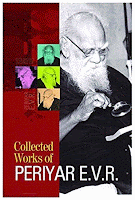
Collected Works of Periyar E. V. Ramasamy
View Source
There were many things Thanthai Periyar E. V. Ramasamy believed like there were things he didn’t. He believed in equality, social justice. He believed in Russia and its communism. He was a fierce critic of Brahmanism. He had publicly burned Manu Smriti and Ramayana and attracted widespread protest. He took the cause of Untouchables at a time when most others were afraid to talk about it. In Vaikom, the low caste people were not allowed to walk in the streets around temple. When local Congress leaders started an agitation, Periyar joined them. For this he was sentenced twice to undergo imprisonment for six months for each term.

In 1925 when the Congress party showed apathy in taking up his cause, Periyar left the party. Before he joined Satyagraha he held 29 important posts in various places. He gave up all that. Though he was a confirmed atheism, he also emphasised that God and religion were sometimes more helpful than laws, to prevent criminality. All men should have mutual love – he said – to receive help from others. He mentioned discipline, love, sympathy, honesty and indebtedness as essential virtues. He was opposed to believing anything – even his own preaching - blindly. He encouraged critical thinking. Rationalism, according to Periyar E. V. Ramasamy, is already in our possession. It’s only a pity that so few of us actually put it to use.


Periyar A Political Biography Thirukkural The Untouchables by Ambedkar

March 5, 2018

Women and Violence: The Agency of Victims and Perpetrators


The document Women and Violence: The Agency of Victims and Perpetrators is divided into four main parts: women as victims of violence; women as perpetrators of violence; governance, violence and agency; and theorising violence and agency. Here I will try to present some notable features of this book and also explore its possible relevance to Indian society.

It may be noted that in today’s society, rape culture significantly compromises a woman’s autonomy, even when an actual incident of rape doesn’t take place. Due to rise in number of reported cases, women live in a constant fear. Despite having stringent laws and an apparently vigilant administration, rapes do happen.
The act of rape, by its very nature, damages the victim’s autonomy since it violates her bodily integrity and disrupts her sense of ownership over her actions and decisions. Being raped can also dramatically alter the agent’s psychological life, interpersonal relationships and identity.
Also rape shatters the victim’s assumptions about the personal safety that her society offers. Often the victim ends up with a total lack of trust in others. This adversely affects her ability to make independent decisions. The damage takes years to heal. However, whether it will heal at all depends on a number of external circumstances. The autonomy is ‘shaped by complex, intersecting social determinants and constituted in the context of interpersonal relationships’ (Mackenzie and Poltera 2010, 48) that being autonomous depends on socially supportive ‘relations and recognition’. Autonomy is acquired over years and years of social existence. A rape entirely changes the course of one’s life. Once it happens, it becomes difficult, if not impossible to regain the level of autonomy that one used to exercise.

It is observed that the society, in a knee-jerk reaction, responded to rape culture by first, enacting stricter laws and secondly by promoting self-defence training for young women. Though apparently these steps bravely address the issue, in truth they are only making the solution more distant and difficult to achieve. In India, the Nirbhaya incident brought about protests and marches that tickled the lawmakers into enacting some more laws. Not that there was no law before to address the rape culture. Though the response of the Government was quite natural, but what it did best was it addressed neither the prevention nor cure. Perhaps the laws were meant to be a deterrent, but even the conservative statistics shows today that they had little or no effect on the prevailing rape culture. Over the last few years the fear or rape among the women only increased.
An upshot of rape culture is that women’s fear of rape can result in a loss of ‘self-confidence, self-respect, and self-esteem; nightmares and other sleep disorders; distrust and suspicion of strangers and acquaintances; chronic anxiety, stress, and depress; inability to live alone (where that is desired); and increased dependence on men for protections, which in turn undermines self-respect and self-confidence’.
The main objection against the introduction of self-defence training is that, it conveniently shifts the responsibility from the perpetrators to the victims. The directly result of rape culture is that it threatens the autonomy of women. During the self-defence training programs attempts are made to focus on re-educating and resocializing women in ways to equip them to resist rape where this inadvertently holds them responsible for mitigating the risk of rape. Also there seems to be an underlying belief that rapes can be avoided from initiatives on the part of the women. The onus of the responsibility is primarily on women and not on men. In South Africa, self-defence courses formed part of the extracurricular activity during high school.
South Africa has ‘higher levels of rape of women and children than anywhere else in the world not at war’ (Moffett 2006, 129).
It didn’t help them, and there’s hardly any possibility that it will help us. Focusing on self-defence training is like treating a symptom of the problem instead of curing the problem itself.

“I can’t even think of taking public transport after 9 O’ Clock,” says a young student in aninterview with Guardian. Even though six years have passed since the brutal rape of 23 year old Nirbhaya, women in India still feel unsafe. In the same interview a martial art teacher says that behind the back of their mind, parents are worried what will happen to their daughters out on the street. A mother, whose daughter is learning Karate, says she feels more confident now that her daughter can take care of her in the face of danger. Some of those interviewed though felt bit sceptical about this whole self-defence thing, because they think, “Asking women to keep themselves safe is a way problematic narrative because you’re keeping the onus of safety on women.” “You are trying to tell rest of the society – men and boys – you can continue doing what you want to do but girls should protect themselves,” says another interviewee.

What followed the Nirbhaya case, as a direct result of a nation-wide protest, was some tinkering with the laws. The maximum punishment of rape became death penalty instead of life imprisonment. Surprisingly that was all what the protestors had demanded for. However, the lawmakers decided not to touch the issue of marital rape as they thought that may destabilize the institution of marriage. They also refused to try military personnel accused of sexual offences under criminal law. However, for the time being, everyone seemed appeased, if not satisfied. And after six years had passed most of us forgot all about it.

On 1st Feb, 2018, the Centre, according to a report published in Times of India, told the Supreme Court that it was not in favour of amending laws to provide for death penalty to those found guilty of sexual assaults on infants and children.

However apparently the people were already way too dissatisfied with the way things were being handled. In Jharkhand, Ratan Lohar, a man convicted in a rape case, was out on bail. He went to Ram Dadaiya slum where he had created terror earlier. There were some altercations between him and the locals. A group of people lynched him (Hindustan Times, Mar 03, 2018). On 19th Feb, 2018, about 1,000 men gathered in front of a police station in Arunachal Pradesh and demanded that two inmates be handed over two them. The two suspects were charged of raping and murdering a five year old girl whose decapitated body had been found in a tea garden on 12th Feb. They lynched the suspects (Sky News, 21st Feb, 2018). Terribly unfortunate as these incidents were, they only showed how little faith people had in our legal system.

What the Government, the activists and the protestors together failed to eliminate was the rigid patriarchal mindset of our society. Most of us will naturally resist any change to that, because directly or indirectly most men benefit from this system. The police are particularly well positioned to provide assistance, but very often because of their own prejudice and lack of training and reluctance to intervene (especially when there’s caste or communal politics involved) they often display a dismissive attitude. The majority of cases of sexual assault and battery end up in one or the other health care facilities. Medical system and its personnel, though well placed to identify signs of abuses, often choose not to intervene. Then there are religious outfits who suggest women should be subservient, patient despite high emotional and physical cost to themselves. They often play a major role in unjustly placing the burden on the victim. All these people contribute heavily to the prevailing rape culture.

Now we’ll examine some of the remarks that came from various classes of our society. Recently Snehlata Shankwar, a biology teacher from Raipur’s Kendriya Vidyalaya warned the girls against wearing lipstick and wearing jeans. She said,
“Girls expose their body only when they don’t have beautiful faces. Girls have become so shameless, why did Nirbhaya go out so late at night with a boy who wasn’t her husband? It’s difficult to understand why an issue was made of this. Such incidents happen with girls in remote areas frequently. Nirbhaya’s mother shouldn’t have allowed her go out so late at night.”Source: Times Now, Jan 30, 2018
Just about a year after the Nirbhaya incident, Finance Minister Arun Jaitley commented at a tourism minister’s conference,
“One small incident of rape in Delhi advertised world over is enough to cost us billions of dollars in terms of global tourism.”Source: NDTV, Aug 22, 2014
On 18th August, 2015, Mulayam Singh Yadav shared his doubts on the feasibility of gang-rape,
“Four people are named for rape, can it be possible? It is not practical.”Source: Catch News, 14 Feb, 2017
Earlier in April 2014 he had shared another of his precious reflections on the misuse of rape laws,
“Boys make mistake. They should not hang for this. We will revoke the anti-rape laws.”Source: Catch News, 14 Feb, 2017
West Bengal Chief Minister Mamata Bannerjee also joined the controversy with a highly regressive comment on Nirbhaya gang-rape case,
“Earlier, if men and women would hold hands, they would get caught by parents and reprimanded but now everything is so open. It’s like an open market with open options. Rapes happen because men and women interact freely.”Source: Catch News, 14 Feb, 2017
But what topped them was probably the statement made by a god man called Asaram Bapu, who, during that time had around 7 crores followers. Immediately after the incident he commented,
"She should have taken God's name and could have held the hand of one of the men and said I consider you as my brother and should have said to the other two, brother I am helpless, you are my brother, my religious brother. She should have taken God's name and held their hands and feet...then the misconduct wouldn't have happened."Source: Times of India, Jan 8, 2013
This is eerily similar to the statement given by Mukesh Singh, one of the accused in Nirbhaya Case, in his interview given to BBC’s Storyville documentary crew.
"A decent girl won't roam around at 9 o'clock at night," he told the BBC. "A girl is far more responsible for rape than a boy. Boy and girl are not equal. Housework and housekeeping is for girls, not roaming in discos and bars at night doing wrong things, wearing wrong clothes."Source: CNN, Mar 4, 2015
Singh, who showed no remorse and merely dubbed the incident as an accident, suggested that they "had a right to teach them a lesson."

All this points to a deeply entrenched patriarchal mindset that is too ugly to even look at. The psyche is so deep rooted that today it is passively supported even by the women who are the primary target of it. The great books that we hold so sacred reek of sexual oppression. In one of those epics, a royal princess, as a result of a pre-marital sex – that was possibly forced – gives birth to a son. An effort to suppress the incident was immediately made by calling the boy ‘a gift from the sun-god’. To emphasise it, the boy was even named accordingly. Another princess, after she got married to discover only to her shock that she now had to sexually satisfy not only her husband but also her four brothers-in-law. No one asked for her consent. In another book, a woman was brutally assaulted when she proposed to one of the hero’s brother. Her fault, she was a Dravidian, therefore too inferior to court an Aryan prince. In the same epic a princess was thrown into fire time and again to prove her loyalty to her husband. She did it without uttering a word of protest, let alone landing a tight slap on his royal cheek – something that he actually deserved.

These are some of the values that were injected in us from early childhood. The founder of every major religion is essentially a patriarch who had also showed his acumen in devising elaborate plan to exploit and enslave women. One among them even went as far as instructing how to treat women who belonged to a different religion – a process that is now perfectedand widely implemented by ISIS soldiers.

Now back to the book Women and Violence: The Agency of Victims and Perpetrators.
... the prevalence of oppressive gender norms: norms which restrict women’s movements, the contact they have with each other and with other men, and limit opportunities for self-sufficiency.
The autonomy of women is hindered by oppressive gender norms, such as ‘women ought not to dishonour their families’, ‘women’s value is dependent upon their reproductive capacities,’ etc. All this somehow limits the role of women to two tasks – child bearing and sexually satisfying the husband. The relation of pornography to patriarchy is the backbone of Andrea Dworkin’s Pornography: Men Possessing Women, where its relation to patriarchy has been widely discussed. Pornography offers ‘a model of how to do sex.’ But men also learn about women and sex from pornography that somehow sends the message that women enjoy being subjugated and abused. Often the focus shifts from mutual pleasure to violence. However, pornography is not the sole contributor when it comes to commercialisation of female body. Haven’t we seen the TV commercials that imply to gain access to a woman all you need is a certain shaving cream, or a certain perfume? And with the invasion of social media nothing is private anymore – not even female sexuality.

The authors of Women and Violence: The Agency of Victims and Perpetrators believe that promoting sex education can make a great difference.
... need to educate young men about consent in terms of communicative sexuality and to emphasis mutual pleasure in sexual encounters. This is one way of ensuring that men treat women as equal partners, with their own desires and needs that ought to be respected.
This could be more useful than teaching young women self-defence, because this will address the root of the problem. There already exists such a system in India, though the methods should be improved. There are people who actively campaign against the system.
"Sex education in schools need to be replaced by yoga education," Ramdev also told reporters. "The government should stop polluting the minds of innocent young children with sex education. Society's morality cannot improve with teaching sex education in schools. And AIDS cannot be prevented by talking free sex and by using condoms."Source: Rediff News, Nov 20, 2014
Prejudiced remarks like these should be countered with criticism. Logic should replace superstitions. Celebrities play important role in enhancing/diminishing the patriarchy. Harvey Weinstein, who was accused of impropriety by more than 100 women, recently made a public statement saying a woman having sex with a Hollywood producer to advance her career is “not rape” (Times of India, Mar 3, 2018). A patriarchal society deeply impairs our value judgement and men who remain indifferent to this are also complicit.

Not long before I wrote this post, a minor girl had immolated herself in Jharkhand’s Chatra District, shortly after she was raped by a man on 22nd Feb, 2018 (Hindustan Times, Feb 24, 2018). It was when she went out of home to answer nature’s call, said the report, that she was raped. There is a vast difference in life of the victim before and after a rape takes place. It is much worsened by the fact that most of the rapes are done by people known to the victim. It proves to the victim that the illusion of safety that the society had offered was an illusion after all. Some are strong enough to cope while to some it is a pain too intense to bear. Not every incident is reported. There are police officers and lawyers who can make rape victim feel like the rape was somehow their fault and the family members of a community whose attitude about bringing shame on the family or community often silence them and every time it happens we lose yet another battle with rape culture.


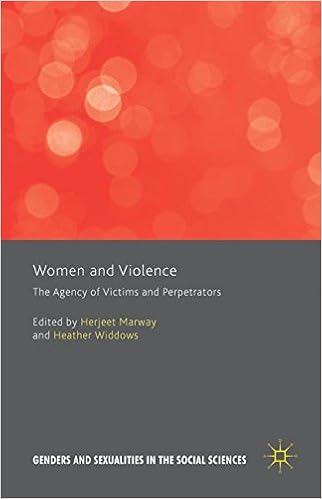
Women and Violence: The Agency of Victims and Perpetrators
View Source
Pornography Men Possessing Women
View Source

March 1, 2018

On Nationalism by Romila Thapar and Others

Book Review of On Nationalism by Romila Thapar, A. G. Noorani and Sadanand Menon

On Nationalism by Romila Thapar A. G. Noorani Sadanand Menon

On Nationalism by Romila Thapar, A. G. Noorani and Sadanand Menon is an effort to trace the root of Hindutva politics and militant nationalism in present day India. It is a collection of essays by Romila Thapar, A. G. Noorani and Sadanand Menon. The rise of militant Nationalism in present day India raises many doubts, questions regarding the true nature of Nationalism and its relevance in India’s polity.  Romila Thapar is an eminent historian – an introduction is hardly necessary. She is presently an Emeritus Professor of History at JNU, New Delhi. A. G. Noorani is an Indian lawyer, historian and author of number of books like The Kashmir Question, The Trial of Bhagat Singh, The RSS and the BJP: A Division of Labour. Sadanand Menon is renowned journalist who has also an arts editor, columnist and photographer.

A trend can be observed in today’s media of using the word Nationalism synonymously with Patriotism. Indeed, when we see the word ‘anti-national’ it is ‘anti-patriotic’ that it actually denotes. But are they necessarily the same? George Orwell said they are not, but they are often confused. Both words are used interchangeably, because the distinction between them is often overlooked, either inadvertently or purposefully.
By “patriotism” I mean devotion to a particular place and a particular way of life, which one believes to be the best in the world but has no wish to force on other people... Nationalism, on the other hand, is inseparable from the desire for the power.
Whether George Orwell’s words are valid in Indian context? Whether a desire for the power is the actual motivating factor? We shall soon see.

During the wake of Independence, nationalism meant Indianness. Other factors like caste and creed were not included in the sentiment of nationality. Nationalism was more about India as a nation, and not with the Government that runs it. A nation referred to its people who saw themselves bound within a territory that sheltered a large number of communities essentially distinct from each other. The thread that tied them was nationality. Simply waving flags and shouting slogans like ‘Bharat Mata ki Jai’ didn’t imply nationalism – not even symbolically. But over the time, there came a vast change in our interpretation.

Today nationalism is expressed by showing your hatred against a particular country, demonstrating your commitment to a particular community and trolling those who refuse to shout a particular version of slogan. An Indian who refuses to shout that slogan, is promptly tagged ‘anti-national’, whereas an Indian stacks away black money in foreign banks, or one who defrauds banks thousands of crores of rupees and gets away with it – the word ‘anti-national’ is hardly used for them. That is because these things are not among the agendas of our nationalist squad.

The real destination is a monolithic culture, a nation united under the umbrella of the ideals of Hindutva. To reach this destination, the primary vehicle is history, or rather a selective, distorted version of history.
Differences among historians arise when the pseudo-nationalisms exaggerate the importance of a single history of one religious community as being the pre-eminent history of the nation, and denigrate and distort the history of other communities.
The version of the history that we were gifted by our colonial rulers was mere furniture to run the administration effectively. They had no real interest in the richness of our cultural diversity that we have inherited over centuries. The history that they served was structured in a way that most suited them. The entire history was divided into three parts – the Hindu era, the Mughal rule and the British colonial period. Emphasis was naturally given on how Indian subjects suffered under the Mughal tyranny, and how British came as a saviour to end that period of injustice and violence. This already prejudiced view was further filtered and enhanced by Hindutva nationalists. Hindus were portrayed as victims in Mughal era. They spoke of Hindus being wronged, being enslaved for thousand years by Muslim rulers.

Ironically, the fact that during all this time, the Hindus victimized lower castes, dalits and Adivasis for two thousand or more years, was hardly discussed. The Sanskrit was elevated to almost a sacred level, but other languages that were also popular during this period were deliberately omitted. That the Mughals were most impressive patrons of the translation of many Sanskrit religious texts into Persian (Mahabharata and Bhagavad Gita among them) were never mentioned. During these massive translation projects Brahmana priests worked together with Persian scholars and were encouraged by both Hindu and Muslim noblemen of the court alike. Gurus and pirs travelled wide and far to preach their understanding of religion across religious and social barriers.
But to speak of victimization is merely to try and impose a particular kind of image of the past onto our present perceptions so as to propagate communal hostility.
The ideology hidden in Nationalism is that a particular race is entitled to have certain privileges simply because they think they are a purer and superior race. In 1930s similar ideologies were propagated in Germany by Nazis. Purity of German society, they argued, could be achieved by annihilating non-Aryans, that is, the Jews and the Gypsies.
This began with segregating and abusing them and ended with taking them forcibly, trainload by trainload, to special camps where they were gassed and killed.
Liberal thinkers and intellectuals were hounded, attacked and were forced to flee Germany. Some of them were not as lucky. They ended up in the concentration camps.
The similarity of this Nazi ideology and that of Golwalkar was more than shocking. In his book We, or Our Nationhood Defined (1939) he wrote:

To keep up the purity of the Race and its culture, Germany shocked the world by her purging the country of the Semitic Races – the Jews. Race pride at its highest has been manifested here. Germany has also shown how well night impossible it is for Races and cultures, having differences going to the root, to be assimilated into one united whole, a good lesson for us in Hindustan to learn and profit by. Ever since that evil day, when Moslems first landed in Hindustan, right up to the present moment, the Hindu Nation has been gallantly fighting on to take on these despoilers.

~ Source: Wikipedia
Hindutva and Hinduism are characteristically different. Hinduism is a religion, while Hindutva is a tool for political mobilization. Hidutva, Romila Thapar says, is rather a Syndicated Hinduism. Hinduism is all inclusive, whereas Hindutva is selective. For the latter, its political function is primary. The word ‘Hindutva’ itself was first connotated this way by V. D. Savarkar in 1923. Later it was adopted by BJP as its ideology in 1989. So naturally, it is wrong to associate it with the Hindus or Hinduism which has a much broader aspect.

In his essay Nationalism and Its Contemporary Discontents in India, A. G. Noorani remarks,
The history of India’s freedom movement is the history of the law of sedition in India and its systematic use by the British colonial rulers as a weapon to crush the freedom movement.
The purpose of this draconian law was to demand subservience to the colonial interest. But why should a democratic nation demand subservience from its subject, unless the interest of its ruler differs from that of the subject? Section 124 – A, is essentially a left-over from the colonial era. The corresponding section was abolished in UK through the Coroners and Justice Act, 2009. But in India it still used against writers, activists, journalists and university students. Section 124-A has been a great help in harassing intellectuals who chose to disagree with the right-wing ideology. Mustafa Kamal Sherwani in Secular Horror: 15 Years Ordeal with Indian Secularism, cited a shocking case of such harassment,
The first information report for sedition was filed on 18 March 1985. The accused were acquitted on 25 July 2000 – fifteen years later.
Today we have a political climate that is always charged with tensions especially for the artists, and the writers. Nobody knows when one accidentally offends the Hindutva nationalists’ sentiments and thereby commits sedition. Since 1992, when the Babri Masjid was pulled down, this cultural oppression had become an everyday phenomenon. It seemed now they have acquired certain immunity from the law.
...street thugs and rioters have threatened, beaten, maimed and assassinated writers, artists, journalists, university professors – anyone, in short, who has dared express themselves in any way that does not conform to what has received their sanction.
From Narendra Dabholkar to Gauri Lankesh – there are many victims of militant nationalism. Vandalism against art has been perfected to the level of art itself.
The new Indian aesthetes (who seem to have no qualms emulating the deep cultural tutelage of the Taliban) do not place much value on what ‘pleases’ in art. They focus selectively on what ‘offends’. And that’s a pretty broad criterion to apply. For one can offend with anything.
It seems these people keep a ready supply of kerosene cans and matchboxes, just in case they find something offensive.

The grim picture has uncanny resemblance to that foreseen by Khushwant Singh in his book The End of India. It is true that the force of religion was often summoned by anti-colonial leaders in the process of national movement. Tilak, Dayananda Saraswati and Bankim Chandra Chatterjee used this method. Even Mahatma was unable to keep religion apart from politics, though Gandhian scholars often argue it was more philosophy than religion. This proved rather harmful over the years. Though Nehru severely criticised the sedition law, the Supreme Court upheld it. Early Congress leaders were indifferent to these issues, though some of them were liberal enough. The exploitation of communal issues for the benefit of vote bank dates back to the time of Indira Gandhi. Though Congress leaders were chief proponents of this method, they couldn’t perfect it the way today’s right-wing politicians did. The future portrayed in On Nationalism by Romila Thapar, A. G. Noorani and Sadanand Menon appears to be that of a theocratic state, with little or no freedom of speech, and intellectuals living at the mercy of its rulers.


Women and Violence An Indian Spy in Pakistan Karachi Halwa