Pages

October 20, 2019

Stillhouse Lake by Rachel Caine Review


Stillhouse Lake by Rachel Caine


After wandering through multiple locations under forged identities Gina Royal and her two children settle in a new home by the side of Stillhouse Lake. Since The Event they have been hounded by trolls both inside and outside the internet. Living like a fugitive is draining. It turns Gina jumpy and paranoid. They want to live, like normal people. Here Connor and Lanny do something they once thought was too dangerous to do. They make friends. So does their mother Gina. Taking root is risky, she knows. But one has to settle some time. With strong allies like Sam, Javi and Absalom on her side she now has a sense of security. Maybe it’s time to reach closure. She needs it. Connor and Lanny need it even more. Suddenly something happens. The mutilated body of a young woman is found floating in Stillhouse Lake. She realizes, no matter how hard she tries, she can’t outrun the dark, ominous shadow of Mel Royal.

The Event took place long ago, a long time before they made Stillhouse Lake their home. Mel, back then, was not an ex-husband yet. He was a good husband, a great father and a hard-working, amiable human being. Gina used to be a dutiful housewife, mostly busy with their children among other things. One day there was an accident. A SUV crashed into their garage, exposing the entire place Mel called ‘his workshop’. Inside, was dangling the mutilated corpse of a woman. The place they once called home suddenly turned into a crime scene. Later they found out, the dead woman in the garage wasn’t the only one Mel killed. This was followed by his arrest, trial and a death sentence. Gina was also arrested on the charge of being an accomplice, but was later acquitted. The Event – a name she’d used to refer to those gruesome memories – had wrecked their lives and turned them into fugitives. People weren’t happy with the acquittal of Mel’s Little Helpers. The punishment isn’t complete, as some of them had suggested, as long as Mel’s family is still alive. To protect herself and the children from this all-consuming hatred, she had no other option but to go into hiding.

It doesn’t matter if Mel’s in prison. He’s got people watching them, he tells Gina. His letters aren’t meaningless blabbers of an unhinged mind. They are filled with threats, deliberate and detailed. Back in Stillhouse Lake, among the familiar faces, there must be someone who’s working secretly to destroy Gina, leaking information on her whereabouts. She doesn’t know whom to trust. If Mel wants to reach her, he’s probably going to do it through her children. Mel’s psychopathic manipulations turn Stillhouse Lake into a cord that starts tightening around her neck. Mel Royal’s very own Modus Operandi.

Rachel Caine’s gripping tale is about a serial killer, yet it has nothing similar to anything I’ve read – fiction or non-fiction – on the subject. The story of Stillhouse Lake starts after the arrest. The public opinion, the mob mentality, the displaced anger, the revenge-mongering – they take control over human reasons. It shows, how some of us, innocent as we’d like to think ourselves to be, could very well turn into killers without the restraint of law. It was clear that Mel Royal controlled several individuals who worked for him, killed for him. But why and when exactly did they decide to help him? How could he wield such power over them, sitting in a small prison cell? What did he have to offer in return? He surely had no money and not everyone who helped him, worshiped him as a hero. These questions were not clearly dealt with. But this is the first book in Rachel Caine’s Stillhouse Lake series. I hope more explanations will follow in the next book. It took me less five hours to finish. Treat yourself with a big-Mac before you start. Once you get past The Event, you may not want to take a break.


September 23, 2019

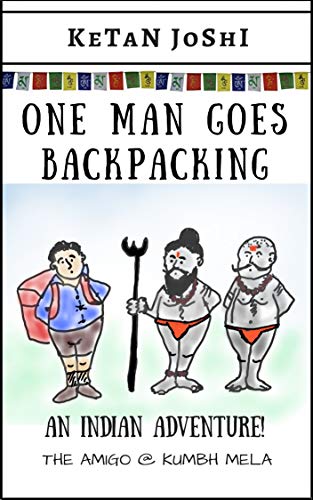
Review: One Man Goes Backpacking by Ketan Joshi


One Man Goes to Backpacking Ketan Joshi


Let the self-righteous, the patriots, the political hobos cool their horns in the ice bucket of Facebook. They have their political correctness. For the rest of us, there’s Ketan Joshi. I’ve been among the few lucky ones to have observed his meteoric rise as a humour travel writer. Started with the three-Amigos series. Now I have his recent book One Man Goes Backpacking. 3 Hours worth of pure, childish and nonsensical fun. That’s Ketan Joshi for you.

Humour’s next of kin is misfortune. The fun part of One Man Goes Backpacking starts when Ketan misses his train to Calcutta. A vendor suggests he should board a local train and chase the first train. Will he get it? That’s a whole different subject. Statistically speaking, the possibility is as thin as that of swatting down a mosquito in blind darkness.  Ketan goes to airport. His imagination brings up the disturbing picture of a journey in general compartment. It’s fraught with a series of misfortunes - scary, clammy and stinking of kerosene. The hilarious details make you go giggling. But if you’ve ever had the pleasure of journeying without reservation, you’d know they are terrible, revolting facts made edible with a pinch of humour.

Mosquitoes suck your blood but that don’t turn you into a vampire. History textbooks, cogs in a vast propaganda-wheel, suck your brain and turn you into a zombie. But One Man Goes Backpacking is not a textbook. Ketan Joshi minces no words, spares nobody. Dates and years don’t run along his pages like numbers on a cranky jackpot. They are stories, interspersed with Ketan’s own opinions and interpretations of them. To him it’s the story that matters more. History is about discovering the origin. Even bungee-jumping has an origin, a story. When retold by Ketan, history takes wings, flies high, then drops like a laughter-bomb.

The imperial hangover of Calcutta, the sleepy, surreal lakes of Sikkim, a pleasant elephant safari in Jaldapara, a strange second-hand bookstore in Bhutan, the bygone royalties of Cooch Behar, an excellent Assamese lunch at Guwahati – they are in the first part of this book. The second part is on Allahabad, Varanasi and the Kumbh. Ketan’s scorn for Bengali social skills and admiration for Bengali foods kept reappearing, the former more frequently than the latter. A rather longish retelling of the Puranic story of ocean-churning is resplendent with wittily crafted anachronistic dialogues. One Man Goes Backpacking by Ketan Joshi is the fascinating tale of a solitary traveller; it thrills and tickles you at the same time.


August 16, 2019

Book Review: Cujo by Stephen King

Cujo by Stephen King


If writing a novel in multiple perspectives were like sculpting, Stephen King would definitely be called its Michelangelo. The pattern, as I noticed, is like this: a character starts in a fairly neutral environment; either the environment or the character’s perspective of the environment changes; the tension heightens; a new character comes in. The cycle is repeated. By the time the first character reappears, he is in muck, waist-deep. The tension piles up. You feel like John “Scottie” Ferguson climbing a fire service ladder to twelfth floor. But Cujo is not as simple as vertigo. It’s a complex scare that chews off your sense of security. But that’s what Stephen King’s all about, right?

The animal that lurks in the closet in Tad’s room, Vic’s deal with Sharp Cereals; his wife Donna’s affair with Steve Kemp; aggressive Joe Cambers; his gloomy, drunkard friend Gary; the five thousand bucks Charity wins in lottery – they all roll down a dark, narrow tunnel, and smash against the same ruin – Cujo. Bret Cambers’ Saint Bernard, that was once a harmless playmate to small kids like Tad, is now baying for human blood. The throat of the dead body that was once Gary Pervier, is torn open. In his kitchen, next to the phone lies bloody, lifeless Joe. Outside Joe’s garage Cujo is laying siege to a Ford Pinto. Its occupants, Tad and his mommy, are dehydrated and scared to death.

How did Cujo come into being? King had a brief encounter with a St. Bernard that tried to attack him in a garage in Maine. There was also this incident of a St. Bernard killing a child. It came in the newspaper. Though it may sound strange, Cujo is the book Stephen King barely remembers writing at all. He was under the influence of cocaine. Good for him. The slobbery, marauding muzzle of Cujo - once you see it through the eyes of its victims - is not something you can easily unsee. It’s the perfect recipe for a nightmare.


July 29, 2019

Reiki: Faith Healing or Science – a Study


Healing Through Reiki Beena Rani Goel


“Everything in nature has a capacity to heal itself. If by some means, this self-healing capacity can be geared into full force, there will be hundreds of situations in which we can avoid swallowing tablets.”
~ Healing Through Reiki by Dr. Beena Rani Goel (MDS) and Ashwita Goel

I’ve recently come across this comprehensive guide on Reiki. It discusses the history, philosophy and methods of practicing Reiki to heal yourself and others. According to the author, she first heard about Reiki while watching a documentary on alternative therapies. “It was the philosophy and simplicity that appealed to me,” she said, “and I decided to learn it.” It’s the same philosophy and especially the ‘simplicity’ that inspired me to start my own research on the viability of Reiki as a method of healing. Those who have googled ‘Reiki’ probably know, the internet is full of praises about it. This article will deal with the subject in a different light.

Let me begin with the fact that the Mikao Usui, the founder of Reiki, was not a doctor. One of his brothers was a doctor. Usui himself is claimed to have earned a degree in theology from the University of Chicago, which is probably false. Research says, he never even attended the University of Chicago, let alone earning a degree from there. It is, however believed, that he had traveled far and wide and was an ardent student of medicine, theology, and psychology.
“When in the nineteenth century Mikao Usui sought the origin of Jesus’ and Buddha’s method of healing, he found them in the ancient remnants of Shiva’s culture, in the ancient esoteric teachings of India.”
It was necessary to crosscheck that. Many Indian babas and even politicians claim that everything (from ballistic missiles to plastic surgery) had their root in ancient India, without even bothering to provide evidence. No sources that I went through suggested that Reiki had actually originated from Shaivism. In fact, in his original manuscript, Usui mentioned Buddhism as the origin. But, since Buddhism itself had materialized as a dissent of Brahmanism, I think the author might have inferred it from there.

According to Healing Through Reiki by Dr. Beena Rani Goel, the idea of Reiki, came to Usui in an enlightenment. This information is available in the internet as well. According to translator Hyakuten Inamoto, Usui did go to Mount Kurama to meditate for twenty-one days. On twenty first day, he saw the light. But doesn’t that make Mikao Usui more sort of a prophet, like Moses who had his revelation at Sinai? And, doesn’t that make Reiki more like a faith and it’s healing, faith healing?
I wasn’t sure, till I stumbled on the following passage,
“While hurrying down the mountain he stubbed his toe and instinctively put his hands on it. His hands became hot and the torn toe was healed.”
The book describes it as one of the five miracles that took place that day.

In Healing Through Reiki by Dr. Beena Rani Goel (MDS) and Ashwita Goel, attempts were made, on more than one ocassions, to associate Reiki with the biblical healing done by Jesus. It’s a shame that the Catholic Church wasn’t as keen to acknowledge Reiki as a legitimate healing practice. The following lines are from Wikipedia, where Reiki is often described as a pseudoscience,
In March 2009, the Committee on Doctrine of the United States Conference of Catholic Bishops issued the document Guidelines for Evaluating Reiki as an Alternative Therapy, in which they declared that the practice of reiki was based on superstition, being neither truly faith healing nor science-based medicine. The guideline concluded that "since reiki therapy is not compatible with either Christian teaching or scientific evidence, it would be inappropriate for Catholic institutions, such as Catholic health care facilities and retreat centers, or persons representing the Church, such as Catholic chaplains, to promote or to provide support for reiki therapy."
Reiki can neither be taught nor administered for free. That was the instruction by Mikao Usui who had taught over 2000 students in his lifetime (he lived 60 years and died of a stroke in 1926).  Which makes it all the more necessary that we investigate before we invest.
Like many other faith-healing practices Reiki is said to work when the patient believes it’ll work.
...you have to start with the hypothesis that Reiki is going to heal you.
 which means there were instances where  it didn’t work.

Why does it work for some while not so for others? The book explains, for
...a person who has been leading a very worldly life, never devoting time to spiritual and philosophical aspects...
The effect of Reiki may be slow, limited or even none. This is similar to the claims often made by many Indian godmen. When something good happens it proves the effectiveness of the treatment. But if something bad happens, only the irreligiosity of the subject are to be blamed. To me that sounds more like quackery.

Be grateful to God. The author says it’s a prerequisite for Reiki? What happens if an atheist undergoes a Reiki? That part is never explained.
What is the rationale behind choosing  21 days as the duration of a Reiki treatment? Is it just because Usui had his revelation on the 21st day, or does it have a strong scientific reason other than that? Assuming there are both positive and negative energy present in a body, how come during Reiki only positive energy flows? What happens to the negative energy that is loosened by vibrations created at the time of attunement? Is it absorbed by the surroundings, including the body of the master? What is the evidence that the seven chakras exist in human body? Do chakras exist in plants and animals too? How many? All such explanations are skipped.

Another problem with Reiki is lack of empirical evidence in its favor. There are testimonies made by five people at the end of this book. We don’t know if they are real people. Even if they are, the sample size is too small to prove anything at all. Reiki can treat plants and animals. I wish they could be included as samples. The book claims that rechargeable cells can be energized by Reiki. I haven’t had opportunity to verify that. I wonder how many chakras a rechargeable cell might have.

When you Google with Reiki, thousands of articles come up. Except for two-three sites, all are ecstatic about its potential as a healing agent. Some even claim it can cure Cancer. But if you dig in bit deeper, you’ll find that most of the authors either practice Reiki themselves or are associated with alternative healing or faith healing practices that have little or no scientific backing. There is no evidence that the ‘energy field’ that Reiki is based on, actually exists. But these things, one may not find in a regular Google search, because these articles are buried under thousands of other articles that had reviewed Reiki positively. So here are a few links for you to find out the alternative facts about this alternative healing.

3.      Reiki Wikipedia entry

Before ending my article, I’d like to add a few lines as my own conclusion. When it comes to something as important as saving a human life, we need to look beyond ‘philosophy’ and ‘simplicity’. Just because a tradition is old, doesn’t mean it’s still viable today. There may be many wise things written in our scriptures, but if not backed by hard and proper evidence, they probably mean nothing. Health care doesn’t come for free. Directly or indirectly, you pay for it. You have every right to investigate.

Back to Book Categories 


July 27, 2019

Book Review: The Anatomy of Hate by Revati Laul


The Anatomy of Hate Revati Laul


What causes violence? What kind of people participate in mob violence? In what’s known probably as the darkest days in the history of Gujarat riots had broken out everywhere across the state. Three characters in The Anatomy of Hate bear the testimony. Their names have been altered. Otherwise they are real people, offsprings of post-Godhara violence. Revati Laul had made significant research for The Anatomy of Hate and it shows, not only in the bibligraphy and acknowledgment, but on the very pages of his book. The persons discussed here were not mute spectators of the violence, but had played active role during the entire time it lasted. Their life history had been laid in front of the readers.

Why is it important to read about these people? Because, that will help us in understanding The Anatomy of Hate. Violence is ingrained in human nature. Violence always destroys. But time and again, it had helped men in their fight against nature. When violence becomes a matter of day to day life, it starts to effect our personalities in a subtle way. Violence is the outlet of hate. One can't survive without the other. To understand violence, we need to understand the hate that triggers it. It's not possible to do background checks on all the people involved in post-Godhara massacre. But a peek into the personalities described in The Anatomy of Hate will give us some idea.

The Anatomy of Hate by Revati Laul also let me have a glimpse of the caste-based politics in Gujarat. The subject of indoctrination of the VHP and RSS also comes up naturally. There are some views on the complicity of the state in it. I found this Revati Laul’s The Anatomy of Hate informative as well as intense. Moreover, it is written in a form of a modern novel, which many will find entertaining at the same time. Though Revati Laul, the author of this book is a journalist by profession, The Anatomy of Hate is not just journalism. It comes with an inseparable, very recognizable stench of inconvenient truth.

November 6, 2018

Kindle Unlimited: The Main Reasons Why You Should Never Sign Up

Kindle Unlimited by John Spencer
If you want to know about the benefits of Amazon’s Kindle Unlimited service, you can simply go check it on Amazon’s website which never gets tired saying how magnificent the service is. But if you are one of those skeptics like me and want to know about its drawbacks, you have to read this book Kindle Unlimited: The Main Reasons Why You Should Never Sign Up To Kindle Unlimited. The irony is this: when I downloaded it, it was available on Kindle Unlimited.

Kindle Unlimited is expensive – probably more than you thought, and definitely more than what they tell you it is. First, let’s look at the titles available under Kindle Unlimited service. The Godfather by Mario Puzo, Misery by Stephen King, Watership Down by Richard Adams. No, you never come across those titles under Kindle Unlimited. Also, it is unlikely that Amazon will ever sell those books with reduced prices. The purpose of Kindle Unlimited is not to provide you those bestsellers. If it had been, they wouldn’t have fed you with junk literature. In India, you pay around 2,000 rupees per year for the service. Sometimes they give you a discount up to around 900 rupees. Now if you look examine carefully, most of the titles available under Kindle Unlimited are very cheap. How many such books can you read in a year? Just do the maths.

You may be thinking, they want to promote the upcoming authors. There you’re mistaken. Read John Spencer’s well-researched book, and you’ll know that in reality authors are being cheated of their well-deserved money through Kindle Unlimited. There are mechanisms – traps – in the scheme that pays authors based on the number of pages read, which is as low as 0.0046 cents per page. Also if you read less than 10 of that book, the author gets nothing. So Amazon is making money both ways – by feeding you the trash and by cheating authors of their hard earned cash.  

According to Kindle Unlimited: The Main Reasons Why You Should Never Sign Up To Kindle Unlimited, people are getting more and more disappointed at this service. True, indeed. There is a limit you can allow yourself eating junks. If only you knew it did some good to the authors, you would probably subscribe out of kindness. But that’s not where the cash is going.

I have been a subscriber for two years, and you wouldn’t believe how I suffered. I agree to most of the things John Spencer said in his book. However, I’d like to emphasize the quality of books you get to Read for Free. Among hundreds of titles that I got in Kindle Unlimited for the last two years, I read only a handful of good books. I don’t regret being made a fool. What I truly regret is being made a fool twice.

This book will take not more than 30 minutes to finish. If you are considering renewing your Kindle Unlimited subscription, please, please, please spare half an hour and read this book before you take any decision.

Back to Book Categories

October 29, 2018

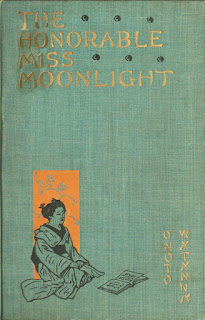
Review: The Honorable Miss Moonlight by Onoto Watanna

The Honorable Miss Moonlight
Click to Download eBook
The Honorable Miss Moonlight by Onoto Watanna is about the kind of love that consumes your present life and promises to haunt you in the afterlife. I believe love to be the most exalted of human emotions. However, I am not so sure about the existence of the afterlife. But it’s not about what I believe. It’s about what the Japanese people believed in post World War I era. So let’s continue with the story.

Young Lord Saito Gonji is the sole heir of the noble Saito family of Japan. His family and relatives arranged his marriage with an orphan girl called Ohano. Most of her life she lived in the Saito household, therefore she was more like a daughter to Lady Gonji. Because of her noble birth, the relatives of Lord Gonji, especially the ones from his mother’s side, approved of this arrangement. Though Lord Gonji had played with her when he was a child, having her as a wife had never crossed his mind. He had the image of a perfect wife in his mind and Ohano came nowhere near it. Gonji looked upon the new, grown-up Ohano with some aversion.

Ohano was plump, with a round, somewhat sullen face, a pouting, full-lipped mouth, and eyes so small they seemed but mere slits in her face. She had inherited the inscrutable, disdainful expression of her lofty ancestors.

That’s when the that of Miss Moonlight, a.k.a. the Spider from the House of Slender Pines crossed his path. She was the most celebrated geisha in Kioto. She was called the Spider because of her peculiar dance style. She was invited to perform in the illustrious house of Saito. Here young Lord Gonji, who till now was troubled by the visions of Ohan, saw her. He was mesmerized.  

Every gesture, every slightest flutter of her sleeve, her hand, her fan, every smallest turn or motion of her bewitching head, was directed at the guest of honor, the son and heir of the house of Saito.

He proposed Moonlight. This created a great upheaval in the Saito family. A geisha, they said, was trained to entertain men, not to marry and bear children. Besides, it would bring disgrace to the honorable Saito family. Young Lord locked himself in his room and pined away for geisha Moonlight. The only person who sympathized with him was his father Lord Ichigo, who finally decided to take matters in his hand. He tried to convince the relatives. When that possibility looked dim, he exercised his authority. He loved his son. Miss Moonlight was married to Lord Gonji. That was when the bad things started happening. Lady Gonji and Ohan, who still lived there, never missed a single opportunity to make the life of Moonlight miserable. A year passed after their marriage without their having any children. That too became a cause of her suffering. There was little Lord Gonji could do to help her. She remained an alien in Saito house till one day, Lady Gonji decided it was time for the Spider to leave.

In The Honorable Miss Moonlight by Onoto Watanna, love was ceaselessly persecuted, repeatedly tested and then finally liberated. Miss Moonlight bore every torment with patience for the sake of the one person she loved. Gonji’s love for Moonlight stood the test of time. Though initially, he yielded to the family’s demand and married Ohan, it was impossible for him to forget his one true love. When the war broke out, Gonji willingly joined the force, as if to flee from the presence of Ohan, the memories of Moonlight and from his own helpless existence.

Onoto Watanna’s The Honorable Miss Moonlight has frequent references to prevailing Japanese culture. There are many Japanese words that the author deliberately left untouched. A proper translation could perhaps make the book more comprehensive, but that would definitely take away the essential cultural flavors from the story. It may be interesting to note that this book, though it may appear as a translated work, was written in English in its original form. This, along with the true identity of the author, I will discuss shortly. But first, let me point out the only thing I didn’t like about this book.

After returning from war, Gonji renewed his search for Moonlight. He scoured the disreputable neighborhood of Yoshiwara, scanned every face of its inmates hoping to find his lost love. He remembered the words of a certain American officer he had met in Manchuria.

“No nation,” the American had said, “can honorably hold its head erect among civilized nations, no matter what its prowess and power, so long as its women are held in such bondage; so long as its women are bartered and sold, often by their own fathers, husbands and brothers, like cattle.”

A realization dawned on him. Yoshiwara, he decided, should be abolished.

This, and the revision of the inhuman and barbarous laws governing divorce, should be his life-work.

This is where I took an uneasy pause. I had nothing against the noble realization of Gonji. He took it upon himself to change the discriminatory laws. That was all very well. But why did he have to wait until reminded by an American officer? What happened to his own morality? To me, it was like a subtle comparison between American ethics and Japanese traditions, in my opinion, was not only unnecessary but also unfair. I am not saying it was a great failing or anything. I just found it kind of amusing.


Onoto Watanna, though her name may sound Japanese to most of us, was a Canadian author. Her real name was Winnifred Eaton. In America, in the year 1912, when The Honorable Miss Moonlight was published, women were not allowed to vote, own property or even work outside home if they were married. However, it was also the time when the Suffrage Movement started taking shape.

October 28, 2018

Review: Tom Pagdin, Pirate by E. J. Brady

Tom Pagdin Edwin James Brady
Download eBook
It was settled. When Tom Pagdin became the captain of a pirate ship, Dave would be his first-mate.

The two thirteen-year-olds escaped the tyranny of their parents to pursue a career in piracy. They didn’t have a ship. As the pirate crew, they had only each other. Tom had found a stray boat and had hidden it somewhere along the riverbank. The two runaways decided to escape in that boat. Before they sailed off, they accidentally overheard two mysterious men hatching a plan to rob a bank. Seemed like their boat had been discovered by these robbers, who now wanted to ‘borrow’ it for the occasion. After the robbery was carried out, one of the criminals stabbed the other and threw the body into the river.

Tom Pagdin and Dave Gibson, hidden behind a bush, watched it all. Little did they know, the murderer was none other than the vicious, French outlaw Jean Petit, who had escaped from jail, had sailed across Pacific in a small boat. George Chard, the bank clerk was unjustly accused of having involvement in the robbery. Would the two teenage pirates be able to save George? Would Jean Petit, who had walked his way over dead bodies of innocent men, manage to escape once again?

Tom Pagdin, Pirate by Edwin James Brady is a wonderful book that is sure to entertain both a child and an adult alike. E. J. Brady was an Australian poet educated both in the United States and Sydney. In his early life, he had worked as a wharf clerk, a farmer, and a journalist. His familiarity with the landscapes of rural Australia has its unmistakable impressions on the pages of Tom Pagdin, Pirate. The major characters of Tom, Dave, and Jean Petit were made alive mainly through conversations. Tom had a thick, Australian rural accent,
“Pick up your swag an’ foller me,” ordered Tom. “I’ll take yer right away.”
while Jean Petit spoke the sibilant English of a Frenchman.
“Ah! Zen vere shall ve meet – you an’ I, eh?”
Some, especially today’s mentors of creative writing, recommend against using dialectical dialogues. The cluster of apostrophes, misspellings – they say – distracts readers away from the plot. In a prose laden with conversations, they probably do. However, there is a certain advantage of this style; the readers don’t just read the conversation, they can actually hear the characters talking among themselves.

Readers will probably notice that there’s a hierarchy of characters in Edwin James Brady’s Tom Pagdin, Pirate. Importance was given to individual characters according to their roles in the main plot. Jean Petit, the uber-villain, was like a shadow of a predator lurking behind the thicket. He was nowhere, at the same time everywhere. He appears and disappears from the scenes, leaving behind him a trail of blood. Though his identity was not revealed until much later, his evil presence was felt right from the beginning. Tom and Dave, being the main characters, lead the story to its destination. George Chard though he was one of the many who benefitted from Tom’s adventure, remained in comparative obscurity. Jacob and Maria, the farmer -couple, in whose house Tom had stayed for a few hours, appeared on the scene and then quickly passed by.  A similar thing happened with the character called Hans Holterman, the wine-maker. He fell in the way of Jean Petit and was disposed of. Jean Petit’s kissing the knife after he murdered the poor old man, however, left its mark. Jean Petit’s total absence of conscience, his ruthless efficiency in crime, and his treacherous tactics made him a formidable adversary of Tom Pagdin.

August 23, 2018

Book Review: Moonshine and Magnolias


Moonshine and Magnolias Book Review
View Source


The purpose of Moonshine and Magnolias by Biswajit Basu is not to educate. The cartoons are minimalist. The author’s sole attention was on storytelling. The images are like screenshots taken right out of life. Sometimes they are about day-to-day events, sometimes they are just general reflections on life and people. The drawings are in black and white and done with minimum number of scratches. There are no political cartoon in this book. However, there are some insinuations about the present political mood prevailing in the country.  

The book is mostly autobiographical. Some cartoons in Moonshine and Magnolias are introspective and often self-deprecating. “The author is evidently inspired by minimalist cartoonists like Sarah Anderson and Alvin Juano,” remarked one reader, “There are a few words that are originally in local language and no attempt was made to either translate or explain them, probably to retain the local flavour.” The book doesn’t fit the charming class of graphic novels. It is rather a collection of short stories presented in graphical form. This is why the book may seem to have ended as abruptly as it started. Here are the opinions of some of the first few readers of this book,

“Some of the stories are infantile. The author misses his childhood. Probably we all do.”
-          Prasun Bannerji
“The only complain I have about it is that it’s too short. I wish it had 50 more pages.”
-          Baisakhi Maitra
But the most interesting review that we received was probably this,
“The book is full of shit. But it’s good shit.”
-          Rahul Srivastava

The reason for getting such varied opinion is that the book doesn’t deal with a particular topic. Like the author said in the description of this book, “MOONSHINE AND MAGNOLIAS is an attempt to make life look bit more nonsensical than it appears to be.” Perhaps there is a subtle philosophy underlying the funny appearance. The things that we keep ourselves occupied with, are actually pointless. It is as if life is a mechanical system full of glitches we call ironies. The best thing we can do is to grease its gears with our sense of humor.


August 16, 2018

Book Review: War Slut by Carlton Mellick III

War Slut by Carlton Mellick III Review
View Source

War Slut by Carlton Mellick III came as a part of a collection called ‘The Bizarre Fiction’. There was a small note along with this collection that said the readers could expect sexually explicit contents bordering on pornography. I didn’t find any such thing in this book. The ‘bizarre’ vibes that I got was probably due to the futuristic world where the story takes place. It’s a grim, dystopia where war has become the only legitimate profession. The book begins with a number of soldiers awaiting the order of their officers. The order doesn’t come, because those officers are in a strange, comatose state with mysterious bullet holes in their bodies. They are somewhere in the arctic zone. They have to rub a cream called ‘the climate camo’ on their body to survive in the harsh weather – some material from distant future. Their weapons are also futuristic. They have slug riffles. There are various types of bullets that they can fire from those riffles. One such bullet is called the library bullet. No matter where it hits you, it kills you. It gnaws through your body. But all these things probably aren’t as important as the war slut.

Each camp has a war slut, a genetically engineered soldier created to relieve sexual tension in combat situations. A war slut is not a sex toy, or a robot. It’s genetically engineered soldier – mind it. It can change its gender as per requirement. When a war slut is not having sex, she usually participates in battle along with other soldiers. The one we have in this story is called ‘Sweet’. When the narrator goes to Sweet, he usually asks her to take the form of Chauney. Chauney is a female soldier who the narrator fancies. From the title of the book one may assume that the story is about this person called Sweet. I think title is bit misleading that way, because the war slut disappears right in the middle of the story. The rest of the book goes on without her. Then at the end she reappears in the most unexpected place. I think the story is about something else and the war slut is just a small part of it.

It is an Orwellian world where people are made to believe that they are threatened by forces that are not properly explained, and the only way out is waging battles. Who are the adversaries? That doesn’t matter. Will the war ever end? That doesn’t matter either. If the enemies are wiped out, they’ll still have the draft dodgers. The draft dodgers are the dissenters who stand against the culture of war. We call these people ‘anti-nationals’ nowadays. I could see efforts in War Slut by Carlton Mellick III to create that atmosphere of oppression. I am not of the opinion that it was immensely successful in that. The description of how the game of saw ball is played, shows a palpable hatred against draft dodgers. Dummies of teachers, poets and philosophers are made. The game involves mutilating these dummies in various ways. The sole purpose of mentioning the game was to help readers visualize the general aversion against intellectuals.

The story of War Slut takes an interesting turn when the troops accidentally arrive at a frozen town. No life sign was detected in their gadgets. The buildings were full of strange mannequins. The horror begins when this lifeless town suddenly turns violent. There are snipers on the roof. But the bullets that are showered on them were not actually bullets. Now they know what turned those officers into living corpses.

Could Carlton Mellick III choose a better title for War Slut? Yes, I think. Something like The Draft Dodgers could be more appropriate. The present title limits the spread as well as the purpose of the plot. The genetically modified soldier is a marvel, but it has very little contribution to the story, other than explaining some of the mysteries at the end of the story. The story attempts to send a strong political message, I understand. But hey, haven’t we had enough dystopian novels already? I mean, when I look around I see myself living in goddamn 1984 for Chrissake. It’s not fiction anymore. It is happening right now.


May 2, 2018

Zero Dial The Dangerous World of Informers by Jyotirmoy Dey


Book Review of Zero Dial: The Dangerous World of Informers by Jyotirmoy Dey (J Dey)

Zero Dial: The Dangerous World of Informers by J Dey
VIEW SOURCE
Zero Dial: The Dangerous World of Informers by Jyotirmoy Dey is a comprehensive study on the role of police informers in solving complicated criminal cases. This book is the result of Dey’s long years of working as a crime reporter for Mid Day. The two books Zero Dial: The Dangerous World of Informers and Khallas – an A to Z Guide to the Underworld contained something that provoked the wrath of Chhota Rajan who eventually hired killers to eliminate the author. But that’s altogether a different story.  Informers are known by many names. Khabri, zero dial or simply zero – they all mean the same thing. Sometimes a don make a circle with his index and thumb. It means - Watch out! There’s an informer among us. The informers are often part of the underworld themselves – gangsters, robbers, thieves or drug-peddlers. Sometimes they are loyal to one gang, like Ahmad in this book. Sometimes they are loyal to whoever offers a better price, like Rahim. Their most notable feature is being featureless, inconspicuous. They blend in with any environment. Sun Tzu had said, “War is all about deception.” The khabris may not have heard about The Art of War. But they were master-strategists. They are so secretive that often their wives don’t know about their work.  
While penning the acknowledgements for this book, I asked an informer if I could mention his name. He readily agreed, without so much as a second thought. Naturally, having adhered to the code of secrecy all these years, I asked him curiously whether he wasn’t afraid of being exposed. “Saab, nobody knows my real name,” he exclaimed, smiling gleefully.
Zero Dial: The Dangerous World of Informers by J. Dey revolves around a terror suspect Ryaz Bhatkal who since 2004 had triggered serial bomb blasts in at least six Indian states. Ahmad an informer arrived at Ani-Terrorism Squad headquarters with some valuable information on Ryaz Bhatkal. There he met ACP Surinder Singh. Shortly after their meeting Ahmad passed on three numbers of Bhatkal’s operatives to ATS. Those numbers were promptly placed under surveillance. At that time police had little experience in dealing with home grown terrors which was vastly different from dealing with the underworld. Armed with Intelligence information the officers zeroed in on Bhatkal. They raided a lodge in Mangalore. The operation failed. Ryaz gave them the slip. Ryaz was trained in Pakistan by ISI. He was no small player. He had his own informers.

Zero Dial: The Dangerous World of Informers goes far beyond the professional life of informers. The politics among themselves, their personal problems, betrayal – this book deals with all. When IB, RAW, ATS and Crime Branch are putting all their resources together to hunt down Bhatkal, Ahmad had to deal with his own problems. Shabbir, his infant son was suffering from chronic pneumonia. The treatment was expensive. Doctor asked Rs. 10,000 for the surgery. Depending on the quality of information an informer’s income varied from around Rs. 5,000 to several lakhs per month. There were informers like Rahim who was so rich that they could employ a number of junior informers under him. Most others, like Ahmad, lived in abject poverty. Rs. 10, 000 was quite a lot of money for Ahmad. He begged help from the officers. He even asked Rahim. Once, in Thane Jail, Ahmad had saved Rahim from Rao’s men. Now, instead of helping him, Rahim suggested he should switch sides. In his time of need, Ahmad found himself deserted. There was only one thing that could get him that kind of money – Ryaz Bhatkal.

J. Dey, as the author was known in media circle was gunned down on 11th June, 2011 by some assailants who, it was later discovered, were employed by Rajendra Sadasiv Nikalje aka Chhota Rajan. During this time Jyotirmoy Dey was working on his book Chindi – Rags to Riches. It was a compilation of stories of 20 gangsters. Chhota Rajan was one of them. Rajan got life imprisonment for killing the journalist. He later confessed,
Dey continued writing stories against me... that my gang has become weak; I'm keeping sick; my loyal people have left me, etc. Hence I got an impression that he was working for the Dawood gang. I tried to convince him, but he didn't listen. I'm not sure whether he really was close to Dawood. But his writings made me feel like that.   
(Source: The Quint)

It was difficult to say whether Rajan was being truthful. During the investigation another name Jigna Vora came up. Perhaps I’ll discuss about it some other time, in some other article. In Zero Dial: The Dangerous World of Informers, the author himself had admitted that his work demanded close connection with the underworld. Zero Dial, said Dey, is not a product of my imagination. It took years to gather these stories, pamper my informers, win their confidence, and get them to tell me more. He had shortlisted three informers, who he considered were the best in the profession. He closely observed them for years. He met his families and children. In his book, the informers don’t appear like mechanical pieces that lose their identities to fit somewhere in a large system of things. They are men gifted with superb intelligence, yet to the ordinary citizens like us, they don’t exist.  

April 18, 2018

The Ghost Next Door by R. L. Stine


Book Review of The Ghost Next Door (Goosebumps Book 10) by R. L. Stine

The Ghost Next Door by R. L. Stine

Ghost Next Door by R. L. Stine is the 10th book from the Goosebumps series. Instead of going to a camp like her best friend Janey did, Hannah spends the vacation with her family. While hanging out in their yard one day, Hannah meets a boy named Danny Anderson. Danny introduces himself as her next door neighbour. He lives in a house that Hannah previously thought was empty. She doesn’t remember having seen anyone move in. This makes her suspicious. She wants to talk about it to her parents, but they hardly show any interest. Hannah regularly writes to Janey, but doesn’t hear back from her. This bothers her. But there’s nothing she can do about it. Her parents couldn’t afford to send her to a camp. So when most of her friends are away, she’s left behind. Meanwhile, she keeps her watch on Danny, who tells her that he goes to Maple Avenue Middle school, the same that Hannah herself goes. How come she has never seen him around then? She asks him about his friends. He names some, but she can’t recognise any of them. She tells him about her friends, and Danny doesn’t recognise them either. This strikes her as singularly odd. Had he been around for a while, like he claims he did, wouldn’t Hannah see him at least once? One day, Danny falls from a ladder. It all happens in Hannah’s presence, but strangely she doesn’t hear the sound of his falling on the ground. Hannah, now has a doubt that Danny isn’t real. Everything about this boy, Danny, living next door is very, very odd and Hannah wants to know if he is telling the truth. Eventually she learns what she wanted to know about him, and also a lot about herself. 

Ghost Next Door by R. L. Stine kept me glued to its pages. Hannah was having frequent nightmares. Only during the last few chapters I realised they were not just nightmares, but highly suggestive narratives from a violent past. I have to admit the final twist in the plot completely caught me unawares. What a strange way for a story to end! It doesn’t scare you half to death or anything. But it certainly fills you with uneasy anticipations. Though the end of Ghost Next Door by R. L. Stine was splendid, I believe a more abrupt ending would do more justice to the story. While reading the last few pages, I had the feeling that the story ran an extra few miles beyond what could be a dramatic end.


Piano Lessons Can Be Murder by R. L. Stine


Book Review of Piano Lessons Can Be Murder by R. L. Stine

Piano Lessons Can Be Murder by R. L. Stine

Piano Lessons Can Be Murder by R. L. Stine is the 13th book from the famous Goosebumps horror series. In the attic of their new home, Jerome finds a piano that seems to play sad melodies all by itself.  Jerome’s parents move from Cedarville to a place called New Goshen. Soon after they settle in their new house, they discover a piano left behind by earlier occupant. That night Jerome hears music coming down from the attic. He decides to inspect. The music stops as soon as he turns the light on. There is nobody in the attic. The piano played by itself. Jerome concludes that it was one of those instruments that play automatically, like a jukebox or something. His parents complain of the noise, because they think it was Jerome who has been tinkering with the piano. Shortly after this his father employs a piano teacher for him. He is to take piano lessons from one Mr. Shreek who marvels at Jerome’s hands. “What beautiful hands,” he seems to be fixated at them. “Excellent hands,” he keeps repeating. The lesson begins. Jerome can still hear the music at midnight. Now that the piano has been brought down from the attic to the family room, it seems quite strange to Jerome that his parents know nothing about the music. He believes the piano is haunted.  One night the spirit manifests itself and warns him to stay away from Dr. Shreek. His parents still don’t believe all this. They take him to the therapist. Jerome knows it’s pointless. He agrees to give Dr. Frye a visit, anyway. He tells Kim Li Chin, one of his fellow-students, about his piano lessons. But the name ‘Dr. Shreek’ seems to frighten her. She tells him about some rumours she heard about Dr. Shreek’s school. Jerome, who is now a regular student of that school, finds it difficult to believe in those rumours until the day he meets Mr. Toggle, the real man behind the school. Piano Lessons can be murder indeed.

Piano Lessons Can Be Murder by R. L. Stine is an excellent book for children. R. L. Stine is an accomplished author. He knows perfectly well, how to keep his readers glued to his books. Every chapter ends with intense suspense. You want to know what happens next. Sometimes they are only false alarms, but they slowly elevates the tension to a point when it becomes impossible to put the book down. A Goosebumps book will hardly take more than 2 hours to finish. The language is kept simple so that young readers can enjoy the stories. If you’re young and into horror stories, Piano Lessons Can Be Murder by R. L. Stine can be a good starter.

April 10, 2018

The Leaving of Things by Jay Antani Book Review

Book Review of The Leaving of Things by Jay Ananti

Leaving of Things by Jay Ananti

The Leaving of Things by Jay Antani is the story of a boy named Vikram whose family, after residing in the U.S. for more than 10 years, returns to India to settle. Leaving behind his friends and a promising future back in States itself was hard for him, though he considers himself greatly responsible for his father’s decision to shift to Ahmedabad. Though the prospect of his father having a permanent employment looked dim, the family hadn’t decided to leave, because they wanted a future for their children – Vikram and Anand. One incident changed that. Vikram, who was returning from a party, was quite drunk. He also had some weed with him. Vikram was picked up by a patrol car. His parents were called. Next morning he had some arguments with his parents. It was then that his father decided to move to India. However, Vikram became repentant and became more responsible. His grades improved. But the damage had already been done. One day his father called and told them that he got a position in Ahmedabad. What followed inevitably was a cultural shock for both Vikram and his brother. Anand, though he was quite apprehensive about the new place, seemed to adapt to his new life gradually, whereas for Vikram it became more and more difficult each day. Though the decision of returning to India was entirely his father’s, it was Vikram who lost more than most of the others. He lost all the familiar places, friendly faces and everything he held dear. He and his girlfriend Shannon decided the break up. He knew it was inevitable, but when it happened he discovered he was less prepared than Shannon. The pollution, the chaos, the corruption – they bothered him. He tried to continue his studies, but the syllabus looked irrelevant and outdated. The hypocrisy in the system was too conspicuous to be ignored. Intermingling of boys and girls in a class was a big no-no, but it was okay for a college clerk to openly ask for bribe. The surprisingly low ethical standard among the people often shocked him. But what shocked him the most was the fatalism with which that people in India have accepted this deterioration as a part of their life.

The Leaving of Things by Jay Antani gives you an India through the point of view of Vikram. It is dismal, but realistic. Some people like Hemant Uncle are still hopeful. “One day, India will change,” he told Vikram, “It will take time. Twenty years, fifty years, hundred years, but it is inevitable. People cannot live like this forever.”  Some others, like Dharmanshu Uncle had stronger and angrier opinions. He said the government was corrupt and useless and succeeded only in making life difficult for everyone, and if you had a shred of ambition, it was best to get out of the country. Corruption, he said, was harder to erase than caste and most people have been either indifferent or complicit. Vikram could relate more to Dharmanshu Uncle. Though the fire was almost smothered, but there were sparks of resentment that was similar to his own anger. “Get rid of all the politicians and Hindu-Muslim zealots, wipe out all trace of this mess we have made these past thousand years. That’s the only hope India has if it’s going to have future,” said Dharmanshu, “Start from the scratch. Too hopeless now the way it is.” He had dreams too, Vikram noticed, but it was disheartening to hear about them now, because every time he mentioned them, he did it in past tense. In him Vikram saw himself in another 30 years. It was not that Vikram hadn’t tried to pursue his dreams here in India. But it meant waiting indefinitely on a long and winding route. His application was accepted by one university in Wisconsin. But the news only placed him in a more difficult position, because it came at a time when his mother was diagnosed cancer. Little did he know that his life was about to take a completely new direction.

The Leaving of Things by Jay Antani is about the things you miss when you try to move on. It is also an honest portrayal of a country through the eyes of an outsider who is trying hard to be a part of it. Perhaps, he is trying too hard, or, maybe he is resisting it too hard – at some point they become synonymous. People, who return from abroad to settle in this country, can easily relate to the characters and incidents. The story is long and has details that are painstakingly minute. At times it feels more like a travelogue than a fiction. Some details are essential because it rationalises Vikram’s responses. Some are unnecessary and could be left out. For example, in Chapter 19, there was an elaborate description of how Vikram brewed tea for his father, an omission of which could have made the literature more compact, lean. One might also find the character of Vikram too mature, too philosophical for his age. However, we have to remember that he had been educated by a system where critical thinking is highly encouraged. What might surprise us as his philosophical reflections, were actually the responses of a critical mind at work. His disappointments, dilemmas, sarcasm and even his vulnerabilities – are only natural reactions for someone in his position. The Leaving of Things is a beautiful work of fiction by Jay Antani, despite its length, which is substantial; I was able to finish it in about 4 hours.


Uneasy Money The Outsider A Man Called Ove

April 8, 2018

Say Cheese and Die by R. L. Stine

Book Review of Say Cheese and Die (Goosebumps Book 20) by R. L. Stine

Say Cheese and Die by R. L. Stine

Say Cheese and Die by R. L. Stine is about four kids who find a camera in a deserted house. Every time a picture is taken with this stolen camera, it shows some frightening aspect of the future. Anything that it predicts immediately turns into reality. Four friends - Greg, Shari, Doug and Michael – are terribly bored. Nothing seems to be entertaining in Pitts Landing. They badly long for some adventure – any adventure. Miachel suggests they explore the Coffman house - a decrepit house where no one seems to be living. However, there’s a rumour about a tramp called Spidey living in that house. They enter the building with a broken windowpane. In the basement they find some empty food boxes tossed all over the floor. This and a few other things show that someone, possibly Spidey, is actually living in the basement. Accidentally they open a secret door on the wall. That’s where the camera was hidden. They take the camera with them. Spidey returns. They escape through another door. As they run away, Spidey watches them from a window. So now he knows who stole his camera.

The pictures they take with this camera, come out weird. Greg’s father has bought a new car. He takes a photo of it. But the photo shows a wreck, a totaled car. Soon Greg’s father meets with an accident. The next photo he takes is of Doug. The picture shows him sprawled on the ground, his neck strangely bent. Shortly after this, Doug is hit by a ball. He collapses on the ground. His unconscious body lies in the same posture as that in the picture. On Shari’s birthday, Greg takes her photo, but she doesn’t appear in it. Soon Shari goes missing. The camera seems to predict the future. Or, is it changing the future in some subtle, devious way?

Say Cheese and Die by R. L. Stine is 20th book in the Goosebumps horror series. There is this familiar fast paced style with each chapter ending with suspense that makes you want to read the next chapter immediately. With each chapter the plot becomes more gripping. However in this book, a few things remain unexplained. For example, after Shari vanished from her own birthday party, where did she go? How did she return? This and few other things, R. L. Stine didn’t care to explain. Loose ends like these make one slightly uneasy. Despite that, Say Cheese and Die by R. L. Stine has enough creeps to scare the hell out of a teenager.


The Werewolf of the Fever Swamp Piano Lessons Can Be Murder Welcome to Camp Nightmare

April 7, 2018

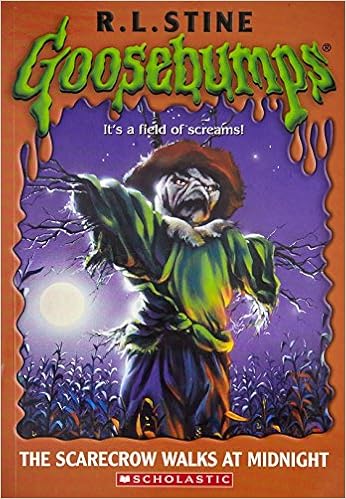
The Scarecrow Walks at Midnight by R. L. Stine

Book Review of The Scarecrow Walks at Midnight (Goosebumps Book 20) by R. L. Stine

Scarecrow Walks at Midnight by R. L. Stine

The Scarecrow Walks at Midnight by R. L. Stine is the story of a farm where the scarecrows come alive through some black magic. Jodie and Mark go to Grandpa Kurt’s farm to spend a month in summer. Stanley, the farm help, who had worked for Grandpa for more than twenty years, meets them at the station. Mark boards at the back of the truck, while Jodie sits at the front with Stanley. Visiting Grandpa Kurt and Grandma Miriam has always been a pleasant thing for them. Jodie starts some conversation with Stanley who is a terrible driver. The corns have already grown higher – Jodie notices. It was then Stanley makes a strange remark, “The Scarecrow Walks at Midnight.” It is written in a book, Stanley says. Jodie can’t figure out whether it was a joke or something.

Stanley in The Scarecrow Walks at Midnight is very strange character. He is not very bright, but manages to do the farm chores. He is extremely superstitious and believes in black magic. He has a book about superstitions that he reads religiously. He circles the barn three times, before going on a fishing trip with Jodie and Mark. Stanley picks a corn to examine its growth. He finds it brown-collared and worm-eaten. This disturbs him. “That’s bad luck!” Stanley says, “The book says so.” Stanley lives with his son Stick, who calls Jodie and Mark, the ‘city kids’ and makes fun of them. Stanley’s remark that the scarecrow walks at midnight seems to have some effect on the children. Stanley says that by chanting spells from his book, it is possible to make the scarecrows come down and walk. One night Jodie opens a window and stares at the wavy cornfields. The shadowy figures of the scarecrows seem to move in unison. It is as if they are struggling to come down from their stakes. This scares them. They want to tell their grandparents about it the first thing in the morning. But it seems they don’t want to talk about it. Even Stanley, who has made those scarecrows, seems evasive. Grandpa Kurt’s farm was such a nice place to enjoy. But now everything seems so different. Soon Jodie and Mark are to learn the truth about the Scarecrows. It seems what Stanley said about the Scarecrows walking at Midnight, was just an understatement. The Scarecrow not only walks at Midnight, they turn into dangerous predators.

The Scarecrow Walks at Midnight by R. L. Stine is the 20th book in his famous Goosebumps horror series. With exception of two or three stories, I find Goosebumps books quite entertaining. Usually they don’t have complicated plots. They have been quite popular among young readers. Jodie is twelve and her brother Mark is eleven. Twelve is the average age of main characters in Goosebumps series. This makes it more relatable as teenage reads. The Scarecrow Walks at Midnight by R. L. Stine has a tight, fast paced plot that will keep you glued to it till the end.


The Werewolf of Fever Swamp The Ghost Next Door Piano Lessons Can Be Murder